Garden and Outdoors
Your outdoor space holds extraordinary potential—whether it’s a small balcony, a suburban backyard, or sprawling acreage. The difference between a thriving garden and a frustrating struggle often comes down to understanding a handful of fundamental principles that apply across all climates and growing conditions. From producing your own food to creating sanctuary spaces for wildlife, the right knowledge transforms outdoor areas into productive, beautiful ecosystems that require less intervention over time.
This comprehensive resource explores the essential pillars of successful gardening and outdoor living. You’ll discover how food production, landscape design, sustainable systems, natural pest management, wildlife support, outdoor furnishings, and ornamental gardening interconnect to create spaces that serve both human needs and environmental health. Whether you’re planting your first tomato or redesigning an entire property, these principles provide the foundation for confident decision-making.
Planning Your Food Garden for Maximum Productivity
Food gardening represents one of the most rewarding applications of outdoor space, but success requires strategic planning rather than spontaneous planting. Three critical factors determine productivity: understanding your unique conditions, selecting appropriate growing methods, and timing your plantings correctly.
Understanding Space and Sunlight Requirements
The most common mistake new gardeners make is underestimating how light exposure patterns change throughout the growing season. A spot that receives full sun in April may be partially shaded by July when neighboring trees fully leaf out. Mapping sunlight exposure across different times of day and seasons prevents disappointing harvests from shade-stressed plants. Even small spaces can produce abundantly when you match crops to available light—leafy greens thrive in partial shade that would leave tomatoes struggling.
Overcrowding represents another productivity killer. While it’s tempting to maximize every inch, plants spaced too closely compete for nutrients, water, and airflow. This stress makes them vulnerable to disease and reduces overall yield despite having more individual plants. Proper spacing often means fewer plants producing more food than crowded beds ever could.
Choosing the Right Growing Method
The raised bed versus in-ground debate ultimately depends on your starting conditions. Raised beds excel when you’re facing poor native soil, drainage issues, or physical limitations that make ground-level gardening challenging. They warm faster in spring, provide excellent drainage, and allow complete control over soil composition. However, they require initial investment, dry out faster during heat waves, and demand more frequent watering.
In-ground gardening works beautifully when you have decent native soil or are willing to improve it gradually. The earth provides natural temperature moderation, moisture retention, and connection to beneficial soil organisms. Many successful gardeners use a hybrid approach—raised beds for heat-loving crops like tomatoes and peppers, in-ground beds for water-hungry squash and root vegetables.
Timing and Rotation Strategies
Succession planting extends harvests from a single growing season dramatically. Rather than planting all your lettuce seeds at once and facing a two-week glut followed by nothing, sowing small amounts every ten to fourteen days provides continuous fresh greens. This technique works equally well for beans, carrots, radishes, and many other quick-maturing crops.
Crop rotation prevents the disease buildup that occurs when the same plant families occupy the same soil year after year. Tomatoes, peppers, and eggplants (all nightshades) share common diseases and pests. Following them with completely different plant families—legumes, brassicas, or root vegetables—breaks pest and disease cycles naturally. Even in small gardens, a simple three-year rotation significantly reduces problems without chemical interventions.
Designing Functional and Beautiful Outdoor Spaces
Effective landscape design balances visual appeal with practical functionality. The most beautiful gardens become frustrating if pathways flood, seating areas collect water, or plants damage structures. Starting with solid infrastructure creates the framework for long-term success.
The Foundation: Drainage and Hardscaping
Drainage deserves more attention than plant selection—a controversial statement that experience validates repeatedly. The most exquisite planting design fails when sitting in waterlogged soil, while even ordinary plants thrive in properly drained locations. Water should move away from structures, never pool on pathways, and percolate through planting beds rather than running off the surface.
Hardscaping elements (patios, pathways, retaining walls, and edging) define the permanent structure of your landscape. These features should be installed before major planting to avoid later disruption. The hardscaping-versus-softscaping balance affects both aesthetics and maintenance—more hardscape generally means less maintenance but higher initial costs and reduced environmental benefits like stormwater absorption.
Creating Flow with Pathways and Lighting
Pathways should follow natural traffic patterns rather than imposing arbitrary routes. Watch where people actually walk before finalizing pathway locations—those worn tracks indicate desired routes. Pathway width matters tremendously: eighteen inches feels cramped, thirty-six inches accommodates comfortable two-way traffic, and forty-eight inches allows walking side-by-side easily.
Low-voltage lighting extends outdoor enjoyment beyond daylight hours while improving safety. These systems operate on twelve volts rather than standard hundred-twenty-volt household current, making installation straightforward and safe for homeowners. Strategic placement includes pathway edges, steps, and transition points between different areas. Warm-toned lights (2700K-3000K) create inviting ambiance, while cooler tones suit task-oriented areas.
Balancing Aesthetics and Property Value
Well-designed landscaping consistently ranks among the highest-return home improvements, with professional assessments suggesting returns between fifteen and twenty percent of installation costs. However, this benefit evaporates when plantings are placed too close to structures. Foundation plantings should remain at least three feet from walls at maturity—closer placement traps moisture against siding, provides pest highways into homes, and eventually requires expensive removal.
Conversation-optimized layouts position seating to encourage interaction rather than forcing people to crane their necks. Circular or U-shaped arrangements work better than straight lines. Consider sight lines, afternoon shade patterns, and proximity to indoor spaces when finalizing layout decisions.
Building Sustainable Garden Ecosystems
Permaculture principles create gardens that increasingly manage themselves, reducing labor while improving productivity. These self-sustaining ecosystems mimic natural patterns where waste from one element feeds another, creating closed loops that require minimal external inputs.
Protecting and Nurturing Your Soil
Bare soil represents an emergency situation in nature—the earth immediately works to cover exposure through volunteer plant growth. This instinct exists because exposed soil loses carbon, erodes in rain, bakes in sun, and allows beneficial organisms to die off. Mulching, cover cropping, or maintaining living groundcovers mimics nature’s protective instinct while suppressing weeds and moderating soil temperature.
The “chop and drop” technique involves cutting nitrogen-rich plants (like comfrey or clover) and leaving them on the soil surface as nutrient-dense mulch. This practice feeds soil organisms, adds organic matter, and recycles nutrients without the work of formal composting. Timing matters—chopping just before flowering captures maximum nutrients before plants set seed.
Water Management and Passive Harvesting
Passive rainwater harvesting works with gravity and landscaping contours to direct and store water rather than shedding it off-property. Simple techniques include creating shallow depressions (swales) along contours to catch and infiltrate runoff, positioning water-hungry plants in natural low spots, and using downspouts to direct roof water into planting beds. Even without storage tanks, these strategies capture thousands of gallons annually that would otherwise become stormwater runoff.
Selecting Plants for Self-Sufficiency
The annual-versus-perennial debate takes different forms in food versus ornamental contexts. Annual vegetables (tomatoes, peppers, squash) provide heavy yields in a single season but require replanting. Perennial food plants (asparagus, artichokes, berries, fruit trees) need years to establish but then produce for decades with minimal input. A balanced food garden includes both: annuals for staple crops, perennials for long-term productivity.
Invasive species pose particular risks in permaculture systems designed to spread and naturalize. Plants like mint, bamboo, and certain ornamental grasses can overwhelm desired species. Research invasive potential in your region before introducing any enthusiastically spreading plant, and use physical barriers when planting known spreaders.
Managing Pests and Soil Health Naturally
Chemical pest control creates a treadmill of dependence—killing beneficial insects alongside pests, disrupting soil biology, and requiring repeated applications. Organic approaches work with natural systems to maintain balance rather than waging endless war.
Beneficial Insects as Your First Line of Defense
Ladybugs, lacewings, parasitic wasps, and predatory beetles consume pest species at rates no hand-picking could match. These beneficial insects require three things: pollen and nectar sources, water, and shelter. Small-flowered plants (alyssum, fennel, cilantro, yarrow) provide the nectar that sustains beneficial adults. Leaving some leaf litter and providing shallow water sources completes the habitat they need.
Companion planting strategically combines plants to confuse pests, attract beneficials, or provide trap crops. Classic combinations include tomatoes with basil (potentially repell
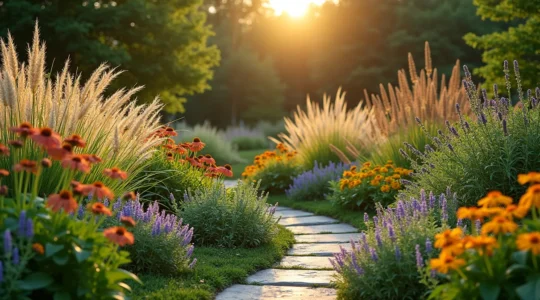
How to Design a “Set It and Forget It” Perennial Garden That Actually Works
A true “set and forget” garden isn’t about finding indestructible plants, but designing a smart ecosystem that manages itself. Mastering plant behavior (aggressive spreaders vs. polite clumpers) prevents future garden wars and endless maintenance. Layering bulbs and perennials by bloom…
Read more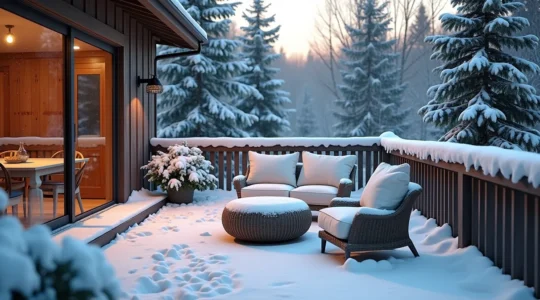
How to Choose Patio Furniture That Actually Survives Winter Outside?
The secret to winter-proof patio furniture isn’t better covers; it’s selecting materials and designs that are fundamentally engineered to manage moisture and withstand the freeze-thaw cycle. Material integrity is paramount. Cast aluminum and HDPE plastic offer superior longevity over untreated…
Read more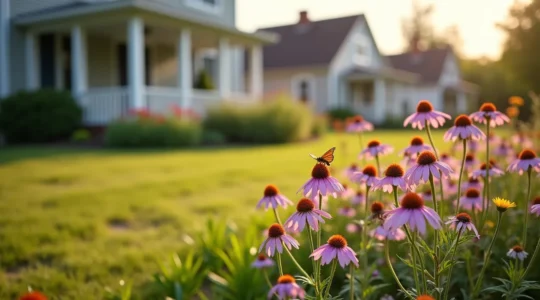
How to Turn Your Lawn Into a Thriving Pollinator Paradise?
That perfect, sterile green lawn can feel more like a failure than an achievement when you know it offers nothing to local wildlife. The solution isn’t just scattering a few flower seeds; it’s about shifting your mindset from a ‘gardener’…
Read more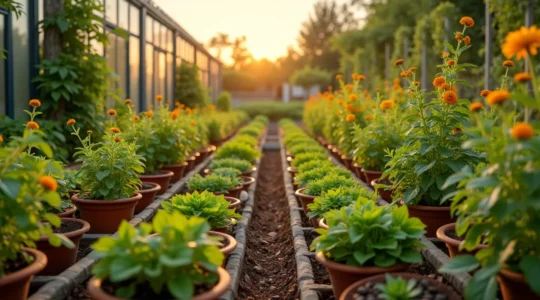
How to Stop Aphids and Slugs Safely: A Toxin-Free Guide for Your Family Garden
Protecting your family from pests doesn’t mean resorting to toxic sprays; the key is building a garden that defends itself. Utilize the “scent of fear” from beneficial insects to deter pests without direct contact. Strengthen your soil with micro-organisms from…
Read more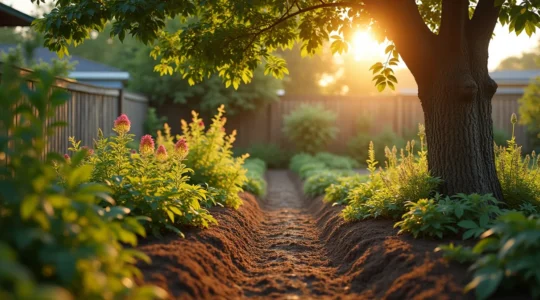
How to Start a Permaculture Guild: Build a Self-Sustaining Ecosystem in Your Backyard
In summary: A permaculture guild is not a static plant list but an actively managed ecosystem designed for self-sufficiency. Success depends on engineering your soil and water systems first, using techniques like heavy mulching and contour swales. Active management, such…
Read more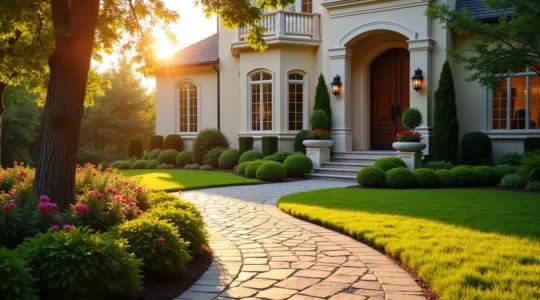
How to Landscape Your Front Yard to Boost Curb Appeal and Property Value
Viewing your front yard as a financial asset, not just an aesthetic feature, is the key to unlocking a significant increase in property value. Strategic landscaping focuses on mitigating high-cost risks (like water damage) and maximizing long-term, low-maintenance returns. The…
Read more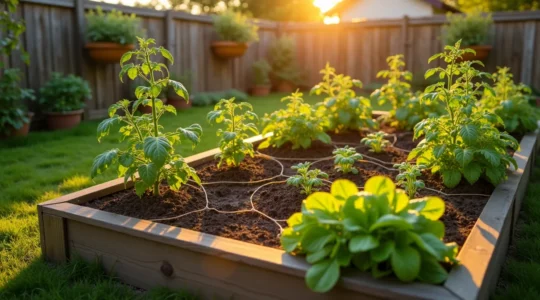
How to Grow 50kg of Vegetables in a 10m² Garden: A Calculation-Based Guide
Achieving a 50kg harvest in a 10m² space is an engineering problem, not a horticultural fantasy. It requires a shift from passive gardening to active yield optimization. Success depends on maximizing four key inputs: available light, soil volume, spatial geometry,…
Read more