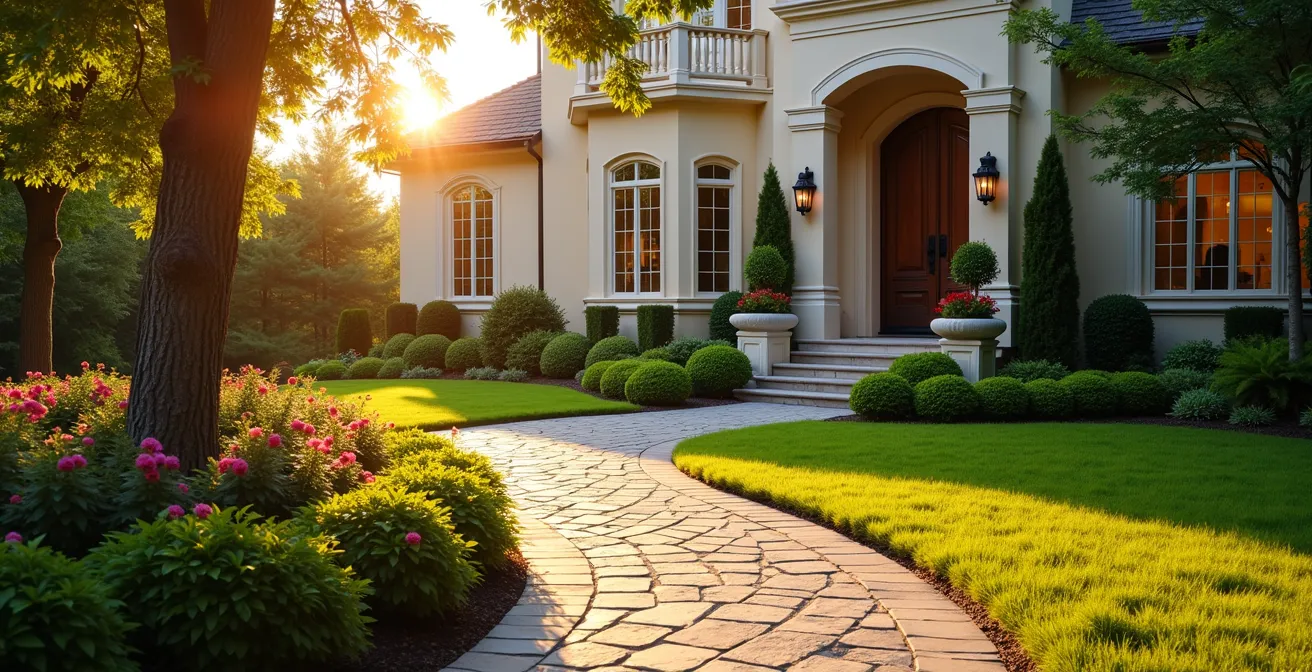
Viewing your front yard as a financial asset, not just an aesthetic feature, is the key to unlocking a significant increase in property value.
- Strategic landscaping focuses on mitigating high-cost risks (like water damage) and maximizing long-term, low-maintenance returns.
- The highest ROI comes from projects that enhance perceived living space and security, such as professional-grade lighting and functional hardscaping.
Recommendation: Begin not with planting, but with a financial audit of your yard’s existing assets and liabilities to identify the most profitable improvement projects.
As a real estate appraiser, I evaluate properties through a financial lens. When homeowners prepare to sell, they often focus on interior renovations, overlooking the balance sheet asset sitting right outside their front door. The common advice—plant colorful flowers, add new mulch—is not wrong, but it’s incomplete. It treats landscaping as decoration, a minor expense. This is a fundamental miscalculation. From an appraiser’s perspective, your front yard is a powerful financial instrument capable of directly influencing a buyer’s perceived value of your home.
The conversation around curb appeal is too often limited to seasonal color and tidy lawns. But what about the 10-year total cost of ownership of a lawn versus pavers? Or the potential six-figure liability of a poorly placed oak tree? These are the questions that separate an expense from an investment. True value enhancement isn’t about spending more; it’s about investing smarter, with a clear understanding of risk and return.
This guide reframes the entire concept of landscaping. We will move beyond aesthetics to analyze every major decision—from drainage and lighting to pathways and furniture—not by how it looks, but by its quantifiable impact on your property’s final appraisal value. The goal is to transform your front yard from a maintenance cost into a high-performing asset. We will dissect the strategic choices that add tangible value and flag the common, costly mistakes that can secretly sabotage your home’s worth.
This analysis will guide you through the critical financial trade-offs of front yard landscaping. By understanding the long-term costs, risks, and returns of each element, you can make informed decisions that directly contribute to a higher selling price.
Summary: A Financial Framework for Curb Appeal
- Why Ignoring Drainage Will Ruin Your Expensive Landscaping?
- How to Install Landscape Lighting Without Hiring an Electrician?
- Pavers or Grass: Which Costs Less to Maintain Over 10 Years?
- The Foundation Damage Caused by Planting Trees Too Close
- How to Design Garden Paths That People Actually Walk On?
- How to Spot the Next Silicon Valley Before Real Estate Booms?
- Why Your Teak Furniture Changes Color and How to Maintain It?
- How to Choose Patio Furniture That Survives Winter Outside?
Why Ignoring Drainage Will Ruin Your Expensive Landscaping?
Before any capital is allocated to aesthetic improvements like plants or hardscaping, the single most critical investment is in water management. From a valuation perspective, improper drainage is not a minor issue; it is a significant financial liability that can negate the value of all other landscaping efforts. Water pooling near the foundation, slow-draining soil, and uncontrolled runoff from downspouts are red flags for any appraiser or savvy buyer. These issues signal a high probability of future costs related to foundation repair, pest infestation, and landscape death.
The cost to mitigate these issues proactively is a fraction of the cost of repair. For example, a professionally installed drainage system installation costs between $2,800 and $6,500, a planned capital expenditure. Conversely, neglecting the issue can lead to foundation damage repairs that easily exceed $15,000, a catastrophic and unplanned financial hit that will be deducted from your home’s value upon inspection. Effective drainage is the invisible infrastructure that protects your entire property investment.
The presence of a well-designed system—or even just evidence of thoughtful water management like properly graded soil and downspout extenders—signals a well-maintained property. It tells a potential buyer that the home has been cared for at a structural level, which builds confidence and supports a higher valuation. Ignoring this foundational element is akin to building a beautiful house on a crumbling cliff; it’s only a matter of time before the entire investment is washed away. Assessing and correcting drainage isn’t just a landscaping task; it’s a primary act of asset protection.
Your DIY Drainage Audit Checklist
- Post-Rain Inspection: Check for any areas of standing water on your lawn or near the foundation 24 hours after a significant rainfall.
- Foundation Health: Inspect foundation walls for signs of moisture, such as moss growth, dark stains, or the white, chalky residue of efflorescence.
- Erosion Patterns: Look for visible channels or washed-out mulch around landscaping beds, indicating uncontrolled water flow.
- Downspout Discharge: Measure the distance your downspouts discharge water from the foundation. The minimum safe distance is five feet.
- Grading Assessment: Verify that the ground slopes away from your house. A minimum slope of 2% (about one-quarter inch drop per foot) is required to direct water away effectively.
How to Install Landscape Lighting Without Hiring an Electrician?
Landscape lighting is one of the most potent valuation multipliers for a property’s exterior. It transcends simple aesthetics by enhancing two critical factors for buyers: security and perceived living space. A well-lit home feels safer and more welcoming, while uplighting on architectural features and trees makes the property feel larger and more luxurious after dark. This is not just an opinion; a strategic lighting plan can deliver a significant return. In fact, many homeowners see an ROI of 50% to 70% on their investment in professional landscape lighting.
The key to achieving this return without the cost of an electrician lies in modern low-voltage (12V) LED systems. These systems are designed for homeowner installation. They use a transformer that plugs into a standard outdoor GFCI outlet, converting household 120V power to a safe 12V. From there, low-voltage cable can be run just beneath the surface of mulch or soil to power the fixtures. This avoids the need for expensive trenching and conduit required for high-voltage installations, dramatically reducing the initial capital expenditure.
However, “DIY-friendly” does not mean that quality can be compromised. The difference between a professional, value-adding installation and an amateurish one that detracts from curb appeal is in the details of the hardware and design. Investing in high-quality fixtures and a thoughtful layout is non-negotiable for achieving a positive ROI.
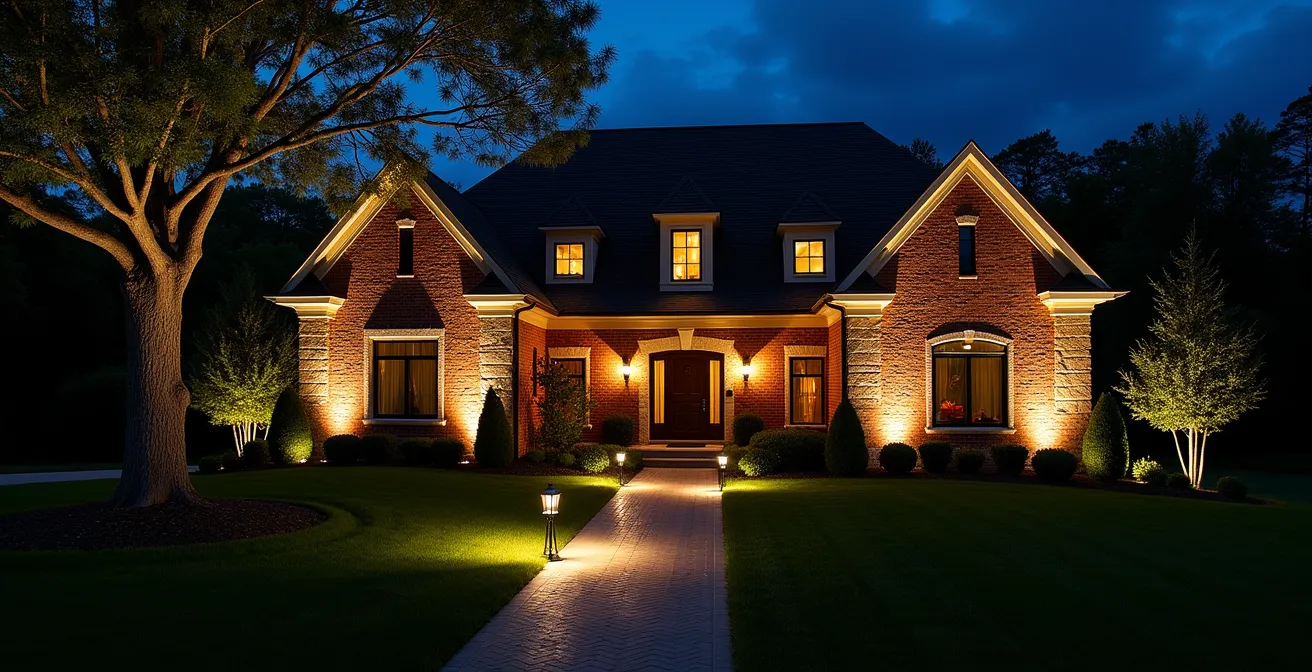
As the image demonstrates, the goal is to create soft pools of warm light that highlight the home’s best features and guide movement, not to flood the yard with harsh, undirected light. The following table illustrates the financial and aesthetic difference between a professional-grade approach and a common amateur one.
| Aspect | Professional Look (Value-Adding) | Amateur Look (Value-Detracting) |
|---|---|---|
| Color Temperature | Consistent 2700K-3000K warm white | Mixed temperatures, often cool or blueish white |
| Fixture Quality | Durable metal fixtures ($100-150/light) | Cheap plastic fixtures ($20-50/light) |
| Beam Angle | Precise 15-30° beams for focused uplighting | Wide, unfocused 60°+ floodlights |
| Lifespan (Asset Longevity) | 15+ years with quality LED | 2-3 years, becoming a recurring expense |
Pavers or Grass: Which Costs Less to Maintain Over 10 Years?
A primary decision in front yard design is the allocation of space between softscape (lawn, garden beds) and hardscape (patios, walkways). From a financial appraisal standpoint, this choice has significant long-term implications for both maintenance costs (operational expenditure) and resale value (return on investment). The debate between installing a paver patio and maintaining a traditional lawn provides a clear case study in analyzing Total Cost of Ownership (TCO).
At first glance, grass appears to be the far cheaper option. However, when analyzed over a 10-year holding period, the financial picture becomes more complex. A lawn is not a one-time cost; it is an ongoing subscription to services including mowing, fertilization, aeration, weed control, and, most significantly, water. Hardscaping, while representing a much larger initial capital expenditure, has minimal ongoing maintenance costs and zero water consumption.
Let’s analyze the 10-year financials. The following table breaks down the estimated costs, demonstrating that while the upfront investment for pavers is substantial, the long-term TCO of a lawn can erode much of its initial cost advantage, especially when factoring in water usage. The real difference lies in how these assets are perceived at resale.
| Cost Factor | Pavers (300 sq ft) | Grass (300 sq ft) |
|---|---|---|
| Initial Installation | $10,500 | $300-$900 |
| Annual Maintenance | $50-$100 (sealing/weeds) | $150-$250 (fertilizer/care) |
| 10-Year Total (excl. water) | $11,000-$11,500 | $1,800-$3,400 |
| Water Usage | None | $200-$400/year |
| 10-Year Grand Total (incl. water) | $11,000-$11,500 | $3,800-$7,400 |
While the lawn remains cheaper in absolute terms, the key valuation metric is ROI. According to a comparative analysis of curb appeal projects, hardscaping like a paver patio can yield a 95% ROI, while a well-maintained lawn can offer an astonishing 217% ROI. The hardscape is a durable, one-time capital improvement that expands the home’s functional living area. The lawn’s high ROI comes from the strong positive signal it sends about the overall maintenance and health of the property. The optimal financial strategy is often a balanced approach: a functional, low-maintenance hardscape area complemented by a smaller, immaculately maintained lawn to maximize both ROIs.
The Foundation Damage Caused by Planting Trees Too Close
Trees are often cited as a top value-add for residential properties. A mature, well-placed tree can indeed increase a home’s appraised value. However, a poorly placed tree, particularly a large species planted too close to the structure, represents one of the most significant financial liabilities a homeowner can create. The risk is not merely aesthetic; it is structural and extremely expensive to remediate. Tree roots seeking water can invade and crack foundation walls, sewer lines, and irrigation systems, leading to catastrophic damage.
The cost to repair a foundation damaged by tree roots is substantial. While a proactive root barrier installation might cost a few thousand dollars, reactive repairs are far more expensive. For instance, installing interior perimeter drain systems cost from $4,000 to $15,000 as a consequence of foundation water issues, often initiated by root damage. This figure doesn’t even include the cost of tree removal or repairing the plumbing and hardscaping that roots may have destroyed. An appraiser or home inspector will immediately flag a large tree with a canopy overhanging the roof or with visible root upheaval near the foundation as a major point of concern that will lower the property’s marketable value.
The solution is strategic selection and placement. The financial return of a tree is directly proportional to its distance from the house and the nature of its root system. A “safe” tree is an asset; a “risky” tree is a ticking time bomb on the balance sheet. Homeowners must think in terms of decades, not just seasons, when planting.
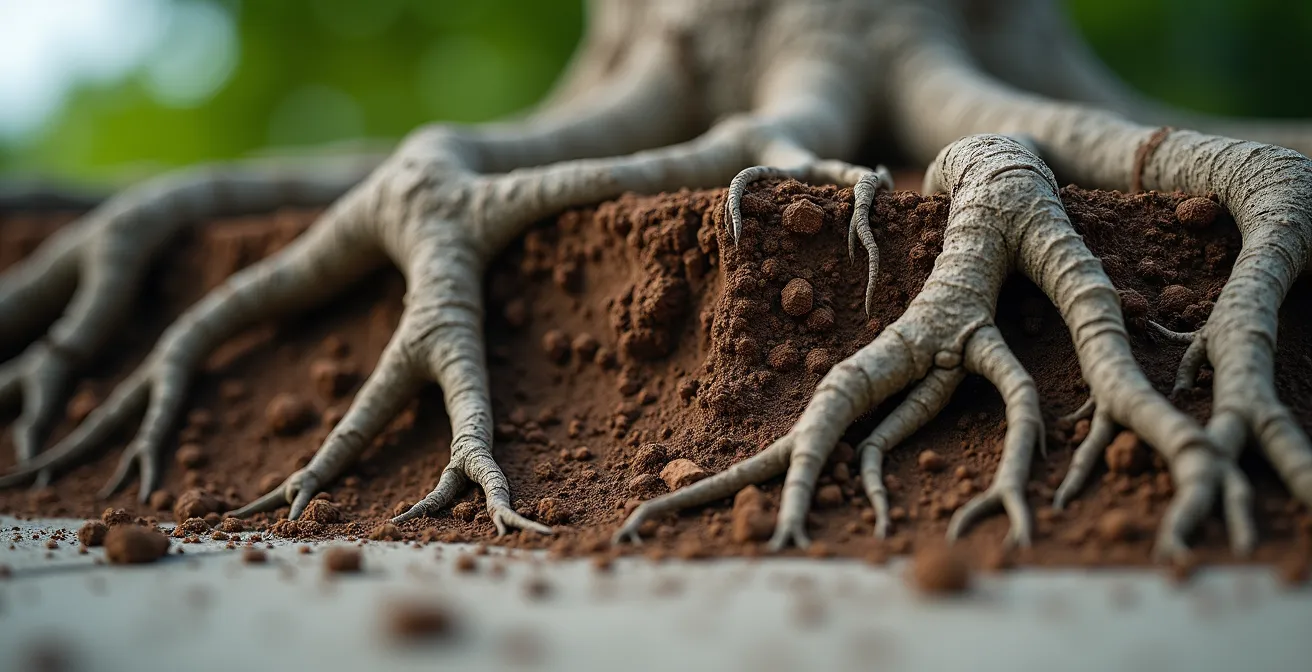
Choosing the right tree for the right location is a critical risk management decision. The following guidelines should be treated as non-negotiable rules for protecting your property’s structural integrity and financial worth.
- Large Trees: Plant large species (e.g., Oak, Maple) a minimum of 20 feet from the foundation.
- Root Systems: Favor trees with deep, non-invasive taproot systems over those with shallow, spreading roots (e.g., Silver Maple, Poplar).
- Root Barriers: For any tree planted within 30 feet of the home, consider installing a root barrier at the time of planting as a low-cost insurance policy.
- Ornamental Varieties: Select dwarf or ornamental varieties for any planting areas within 15 feet of the structure.
How to Design Garden Paths That People Actually Walk On?
Walkways and garden paths serve a dual purpose in landscape valuation. Functionally, they direct traffic and protect lawns. Aesthetically, they guide the eye and create a sense of journey and discovery through the space. However, many homeowners make a critical design error: they create paths based on geometric or aesthetic desires rather than on human behavior. The result is a costly, unused hardscape feature with a worn-out trail in the grass right next to it. From an appraiser’s view, this is a sign of poor planning and detracts from the property’s perceived functionality.
The most successful, and therefore most valuable, garden paths are those that follow what urban planners call “desire lines.” These are the intuitive, most efficient routes people naturally take between two points. A path that ignores these natural instincts will be ignored itself. A simple but effective method to discover these lines is the “Flour Test,” which involves lightly dusting an area with flour to see where footprints naturally appear over several days. Designing a path along these revealed routes ensures it will be used, making it a functional asset rather than a decorative folly.
Beyond placement, the materials and dimensions of the path contribute significantly to its perceived value. A path that is too narrow feels cramped and utilitarian. As the experts at Pretty Purple Door Garden Design note, a path should be at least four feet wide to feel generous and allow two people to walk side-by-side. The material choice also matters.
A path should be at least 4 feet wide to feel generous, use materials that create a pleasing sound/feel underfoot, and always lead to a logical destination.
– Pretty Purple Door Garden Design, 10 Curb Appeal Tips That Instantly Upgrade Your Front Yard
A well-designed path feels like an intentional and high-quality extension of the home itself. It connects spaces logically—from the driveway to the front door, or from the patio to a garden feature. This sense of thoughtful design and high functionality is something buyers feel viscerally, which translates directly into a higher perceived value for the entire property.
How to Spot the Next Silicon Valley Before Real Estate Booms?
In real estate investment, spotting the “next Silicon Valley” means identifying undervalued assets with high growth potential. The same principle applies to your front yard. Instead of undertaking a single, massive overhaul, a more financially astute strategy is to focus on a portfolio of small, high-ROI “micro-investments.” These are low-cost projects that deliver a disproportionately large impact on curb appeal and, therefore, on a buyer’s first impression. A powerful first impression can set a positive tone for the entire showing, potentially leading to a higher offer. In fact, numerous real estate studies suggest that well-designed landscaping can boost property value by as much as 10%.
The goal is to identify the elements that an appraiser or buyer’s eye is naturally drawn to and invest capital there. These focal points act as “valuation multipliers.” A tired, generic front door can be a significant detractor, but a freshly painted door in a bold, complementary color becomes an instant, memorable feature for a very low cost. Similarly, outdated, builder-grade house numbers or a rusty mailbox can make a property feel dated, while modern, stylish replacements signal that the home is updated and well-maintained.
These are not major renovations; they are strategic capital allocations. Each project on its own is minor, but their cumulative effect creates a powerful narrative of a cared-for, high-value property. The key is to choose upgrades that look significantly more expensive than their actual cost. Below is a list of proven, high-impact projects that can be completed with a modest budget, each one a “value boom” for your front yard portfolio.
- Paint Front Door: A $35 investment in a quart of high-quality paint can create an immediate, dramatic focal point.
- Upgrade House Numbers: For $50-100, you can replace generic numbers with a modern font that transforms the home’s perceived style.
- Replace Mailbox: A new, stylish mailbox for $75-150 can act as a “welcoming handshake” for the property.
- Install Path Lighting: A few low-voltage path lights ($100-150 per fixture) add immense perceived value, security, and luxury.
- Add Window Boxes: For $25-50 per box, you can add a pop of color and charm that draws the eye upward and frames the windows.
Why Your Teak Furniture Changes Color and How to Maintain It?
Outdoor furniture is not merely a functional item; from a home staging and valuation perspective, it’s a critical prop used to sell a lifestyle. High-quality furniture like teak signals luxury, permanence, and an effortless indoor-outdoor living experience that is highly desirable to buyers. However, the condition of that furniture is paramount. Understanding why teak changes color and how to maintain it is key to ensuring this asset contributes positively to your home’s curb appeal score.
Teak wood is rich in natural oils and has a dense grain, which makes it exceptionally durable against the elements. When new, it has a warm, honey-brown color. Left untreated, exposure to UV rays and rain will cause these oils to evaporate from the surface, and the wood will naturally weather to a silvery-gray patina. This color change is not a sign of rot or decay; it is a normal, protective process. The critical distinction for property value is whether this patina looks like an elegant, intentional design choice or a sign of neglect.
From a financial standpoint, there are two high-value maintenance strategies for your teak assets:
Case Study: Two High-Value Teak Maintenance Strategies
Strategy 1 – The ‘Pristine Look’: This strategy involves applying a teak protector or sealer one to two times per year to maintain the original honey-brown color. This look signals meticulous, high-end property care and appeals to buyers who value a polished, “like-new” aesthetic. It communicates that every detail of the property is actively managed. Strategy 2 – The ‘Elegant Patina’: This lower-maintenance approach allows the teak to weather naturally to its silver-gray state. The key to making this a value-add is to perform a thorough cleaning twice yearly with a specialized two-part teak cleaner and brightener. This removes any dirt, mildew, or stains, leaving a clean, distinguished, and uniform silver finish that communicates timeless elegance rather than abandonment.
Both strategies can enhance curb appeal, but a mixed, splotchy, or dirty appearance is a major detractor. The choice of strategy depends on the home’s architectural style and the desired market perception. Regardless of the choice, a commitment to a consistent maintenance plan is what preserves the furniture’s value as a staging asset.
Key Takeaways
- Mitigate First, Beautify Second: The highest financial priority is addressing foundational risks like poor drainage and improperly placed trees before spending on aesthetics.
- Invest in Perceived Space and Security: High-ROI projects like low-voltage lighting and functional hardscaping expand the usable living area and enhance security, directly boosting buyer appeal.
- Analyze Total Cost of Ownership: Evaluate landscaping choices based on their 10-year cost, including maintenance and water, not just the initial installation price.
How to Choose Patio Furniture That Survives Winter Outside?
The final layer of your front yard’s financial presentation is its staging. Patio furniture, especially pieces visible from the street like a front porch seating area, serves a critical role. It must telegraph a specific, desirable lifestyle to potential buyers. As HGTV design experts emphasize, the furniture’s purpose extends beyond personal use; it is a tool to sell an aspirational vision. A well-chosen set can make an outdoor space feel like a deliberate and inviting extension of the home’s interior living area, significantly increasing its perceived value.
The furniture is not just for you; it’s a prop to sell a lifestyle. The key is choosing pieces that make the outdoor space look like an inviting and functional extension of the home.
– HGTV Design Experts, Curb Appeal Ideas, Tips & Inspiration
From a valuation perspective, the most important characteristic of this furniture is its ability to look pristine with minimal effort, especially after surviving a winter outside. Furniture that is cracked, rusted, or faded after one season is a poor investment. The choice of material is therefore a direct investment in long-term curb appeal. Materials like powder-coated cast aluminum, high-density polyethylene (HDPE) lumber, and, of course, teak are designed to withstand harsh weather with little more than a simple cleaning. They represent a higher initial capital expenditure but have a much longer lifespan and lower annual maintenance cost, making them superior long-term assets.
Furthermore, the style of the furniture must be in harmony with the home’s architecture to create a cohesive and high-end look. Mismatched or stylistically inappropriate furniture can disrupt the entire aesthetic and cheapen the property’s presentation. The goal is to create a picture that looks professionally curated. A contemporary home calls for sleek, minimalist designs, while a classic Colonial is complemented by traditional rockers. This thoughtful pairing demonstrates an attention to detail that buyers associate with a high-quality, well-maintained home.
- Modern Homes: Pair with sleek metal frames, minimalist teak, or concrete-composite pieces.
- Colonial Homes: Use classic white or black wooden rockers or benches with simple cushions.
- Craftsman Homes: Complement with natural wood, particularly in robust styles like Adirondack chairs.
- Mediterranean Homes: Choose wrought iron pieces, often with colorful, patterned cushions.
The logical next step is to conduct a financial audit of your own front yard. Assess each element not for its current look, but for its long-term cost, risk, and potential return on investment, and begin planning your capital improvements accordingly.