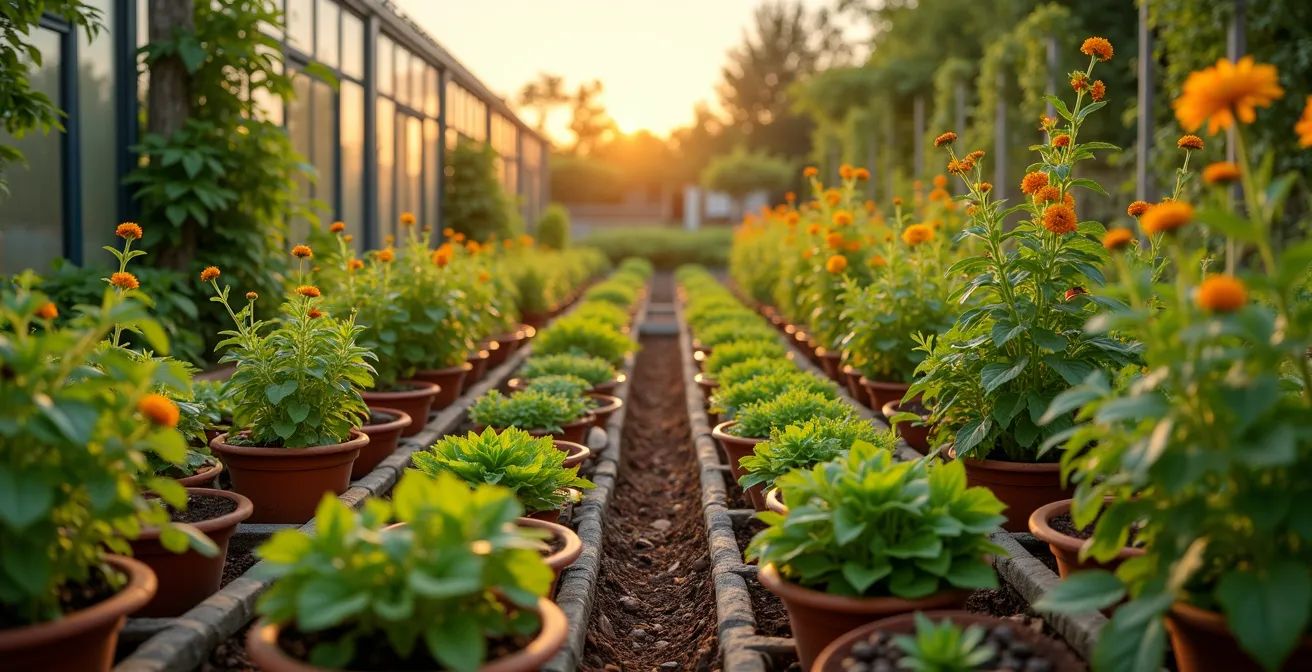
Protecting your family from pests doesn’t mean resorting to toxic sprays; the key is building a garden that defends itself.
- Utilize the “scent of fear” from beneficial insects to deter pests without direct contact.
- Strengthen your soil with micro-organisms from compost tea to build plant immunity from the ground up.
- Implement long-term strategies like crop rotation to naturally break pest and disease life cycles.
Recommendation: Focus on creating a balanced, resilient ecosystem rather than just eliminating pests. This is the foundation for a truly safe and productive garden for your kids and pets.
There’s a deep satisfaction in watching your children or pets play freely in the backyard. But that joy can be shadowed by a nagging worry for any parent who gardens: pests. The sight of aphids smothering your prize-winning roses or slugs decimating your lettuce patch often leads to a quick, panicked trip to the garden center. The shelves are lined with solutions, many labeled “organic,” but a lingering doubt remains. What is actually in this bottle? Is it truly safe if my toddler touches the leaves or my dog nibbles on the grass nearby?
The conventional approach to pest control is reactive. We see a problem, we spray a solution. But this puts us on a constant treadmill of vigilance and chemical application. The real secret to a thriving, safe garden isn’t found in a spray bottle. It’s in shifting your mindset from pest eradication to ecosystem cultivation. What if the most powerful way to control pests was to build a garden so healthy and balanced that it largely managed them for you?
This guide moves beyond simply listing alternatives to toxic sprays. We will explore the “why” behind powerful organic strategies. You’ll learn how to supercharge your soil’s natural defenses, use plants to strategically confuse and repel pests, and understand the signals that tell you when—and if—intervention is even necessary. It’s about creating a resilient garden ecosystem that is not only productive but fundamentally safe for the whole family to enjoy.
For those who prefer a visual summary, the following video offers a great introduction to one of the key organic methods for dealing with common garden pests like slugs and snails, perfectly complementing the strategies in this guide.
To help you navigate these powerful techniques, we have structured this guide to walk you through each layer of building a resilient, pest-resistant garden. The following summary outlines the key topics we will cover, from harnessing beneficial insects to designing a garden that outsmarts pests from the start.
Summary: A Toxin-Free Guide to Stopping Aphids and Slugs
- Why Buying Ladybugs Might Save Your Roses?
- How to Brew Compost Tea to Supercharge Your Soil Life?
- Neem Oil or Insecticidal Soap: Which Is Safer for Bees?
- The Nitrogen Burn That Turns Your Leaves Yellow
- How to Pair Plants to Confuse Pests Naturally?
- Why Your Plastic Tupperware Might Be Messing With Your Hormones?
- Why Planting Tomatoes in the Same Spot Kills Your Harvest?
- How to Grow 50kg of Vegetables in a 10m² Garden?
Why Buying Ladybugs Might Save Your Roses?
Releasing ladybugs into your garden is a classic organic pest control method, but their power goes far beyond simply eating aphids. The true genius of this strategy lies in harnessing what we can call biological intelligence. Pests like aphids have evolved to recognize their predators, and this fear response can be a powerful tool. It’s not just about predation; it’s about psychological warfare on a miniature scale.
This concept is more than just theory; it’s backed by fascinating research into the subtle interactions within a garden ecosystem. By understanding these mechanisms, we can create a safer, more effective pest deterrent system that doesn’t rely on a single drop of spray.
Case Study: Penn State’s Ladybug Scent Innovation
Proving that fear is a powerful weapon, researchers at Penn State discovered that the mere odor of ladybugs is enough to significantly disrupt aphid behavior. In their study, the presence of ladybug scents alone caused aphids to reduce their feeding time and led to a 25% drop in their population numbers, even without any ladybugs physically present. The team even developed a commercial scent diffuser that constantly signals “danger” to aphids, effectively protecting crops without any chemical application. This highlights that encouraging beneficial insects creates a “landscape of fear” that deters pests systemically.
To make the most of your ladybug allies, you need to create an environment where they want to stay. Simply releasing them from a container isn’t enough; you must provide the right habitat and resources to encourage them to establish a permanent population that will protect your plants year after year. Consider their entire lifecycle—they need water, shelter, and alternative food sources like pollen when aphids are scarce.
By creating a supportive habitat, you transform a one-time purchase into a long-term, self-sustaining pest control solution that is completely safe for children and pets.
How to Brew Compost Tea to Supercharge Your Soil Life?
A truly resilient garden starts from the ground up. Instead of thinking of soil as inert dirt, view it as a living, breathing ecosystem teeming with billions of beneficial micro-organisms. A healthy soil food web is your garden’s immune system, protecting plants from diseases and making them less attractive to pests. One of the most effective ways to boost this microbial life is by applying aerated compost tea.
Unlike simple compost leachate, actively brewed compost tea is a concentrated liquid culture of bacteria, fungi, protozoa, and nematodes. When you drench the soil or spray the leaves, you are inoculating your garden with a protective army of microscopic allies. This process helps plants absorb nutrients more efficiently and can outcompete pathogenic organisms for resources.
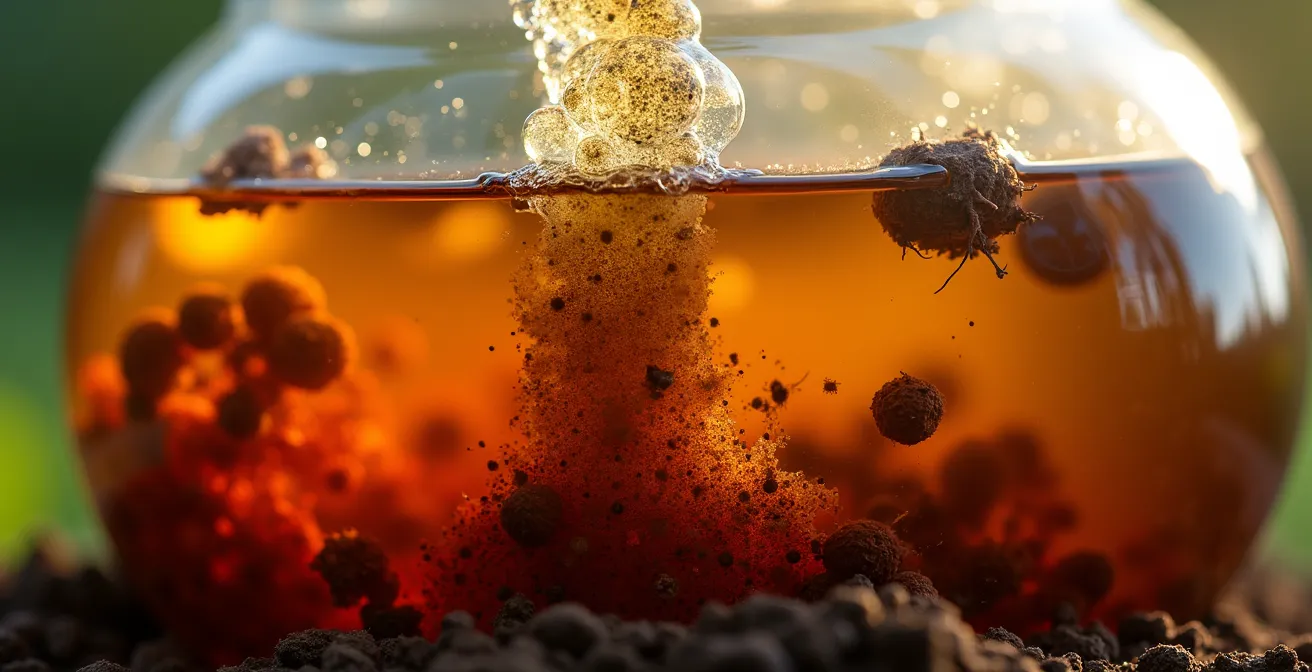
As you can see in this actively brewing tea, the aeration process is critical. It feeds oxygen to the beneficial aerobic organisms, encouraging them to multiply exponentially. Different brewing times and ingredients can create teas dominated by either fungi or bacteria, allowing you to tailor the tea to the specific needs of your plants.
Understanding the difference between tea types is key to getting the right results for your garden. As detailed in the following table based on guidelines for organic control, the application and benefits vary significantly.
| Tea Type | Best For | Brew Time | Application Method |
|---|---|---|---|
| Aerobic (Fungal-Dominant) | Disease prevention, woody plants | 24-36 hours | Foliar spray |
| Aerobic (Bacteria-Dominant) | Vegetable gardens, nutrient cycling | 18-24 hours | Soil drench |
| Anaerobic | Not recommended | N/A | Can harm plants |
By regularly feeding your soil’s microbial life, you build a foundation of health that makes your garden far less susceptible to pest and disease pressure in the first place.
Neem Oil or Insecticidal Soap: Which Is Safer for Bees?
Even in the most balanced garden, you may occasionally need a direct intervention. Neem oil and insecticidal soap are two common choices for organic gardeners, but it’s crucial to understand they are not harmless. They are pesticides, and their safety depends entirely on how and when they are used. The key question for a concerned parent and gardener is: which is the safer choice, especially for vital pollinators like bees?
Insecticidal soap works by physically dissolving the outer protective layer of soft-bodied insects like aphids, causing them to dehydrate. Neem oil has multiple modes of action, acting as a repellent, a feeding inhibitor, and a hormone disruptor that interrupts the pest’s life cycle. Both can be harmful to beneficial insects, including bees, if applied incorrectly. The safest approach is to spray only at dusk or very early in the morning when bees are not active. This allows the product to dry before pollinators begin foraging.
While DIY soap sprays are popular, they can be risky. Using the wrong type of soap (like a detergent) can strip the protective waxes off plant leaves, causing more harm than good. As Heather Stoven, an expert with the Oregon State University Extension Service, points out, “Commercial formulations of insecticidal soap have been tested on plants and are safer than homemade versions.” This expert guidance underscores the importance of using properly formulated products to ensure plant safety.
Most importantly, before you reach for any spray, you must determine if it’s even necessary. This is the core principle of Integrated Pest Management (IPM). It requires observation and establishing a safety threshold for action, rather than reacting to the first sight of a pest.
Your Action Plan: Deciding When to Intervene
- Pest Monitoring: Use yellow sticky traps to perform a weekly count of pest populations. Note the types and numbers.
- Beneficial Inventory: Count the number of beneficial insects (ladybugs, lacewings) versus pests. If the ratio is 1:10 or better, hold off on treatment as nature is balancing itself.
- Damage Assessment: Check for physical plant damage. If less than 10% of the leaf surface is affected, continue to monitor without spraying.
- Action Threshold: Only apply a targeted treatment if leaf damage exceeds a 20% threshold or the beneficial-to-pest ratio drops below 1:15.
- Follow-Up Evaluation: After a targeted application, wait 48 hours to re-evaluate the pest population and damage before considering any repeat treatment.
Ultimately, the safest spray is the one you don’t have to use. By using these products as a last resort and applying them with extreme care, you can tackle an outbreak without disrupting the beneficial insect populations you’ve worked so hard to attract.
The Nitrogen Burn That Turns Your Leaves Yellow
When we see yellowing leaves, our first instinct is often to add fertilizer, assuming a nutrient deficiency. However, the problem could be the exact opposite: an excess of nitrogen. This condition, known as nitrogen burn, not only damages your plants but also sends out a dinner invitation to sap-sucking pests like aphids.
This is a perfect example of nutrient mismanagement. In our desire to promote lush, green growth, we can inadvertently make our plants weak and vulnerable. Too much nitrogen forces rapid, soft, and sappy growth. This tender new foliage is easy for aphids to pierce and provides them with a rich, sugary meal. You are essentially turning your plants into a five-star buffet for pests.
The connection between over-fertilization and pest attraction is well-documented. For instance, research indicates that over-fertilized plants with excess nitrogen can attract three times more aphids than those with balanced nutrition. This simple fact reframes fertilizing from a routine task to a strategic decision. The goal isn’t maximum growth at all costs; it’s steady, strong, and resilient growth.
Learning to “read” your plants is a key skill. You must be able to distinguish between the yellowing of a nitrogen deficiency (typically starting in older, lower leaves) and the tell-tale signs of nitrogen burn (scorched leaf tips and edges, often on new growth).
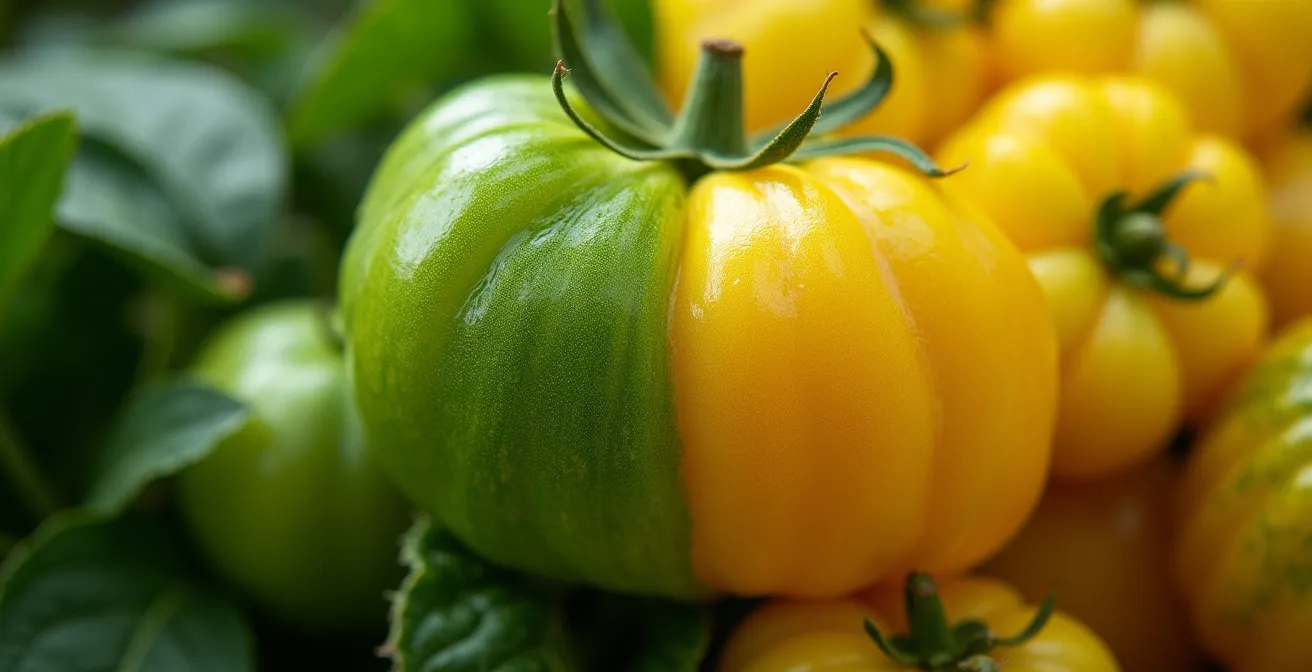
The contrast is stark. Healthy leaves have a uniform, vibrant color, while over-fertilized leaves become stressed, yellow, and unable to defend themselves. Instead of reaching for a generic, high-nitrogen fertilizer, opt for slow-release organic options like compost or well-rotted manure. These feed the soil, which in turn feeds the plant at a natural, sustainable pace.
By providing balanced nutrition, you build plants that are structurally stronger and chemically less appealing to pests, creating another layer of systemic, toxin-free protection.
How to Pair Plants to Confuse Pests Naturally?
Companion planting is a time-honored gardening technique that goes far beyond simple folklore. It is a sophisticated strategy of polyculture, where a diverse community of plants works together to create a confusing and inhospitable environment for pests. Instead of a monoculture—a single, uniform crop that is an easy target—you create a complex landscape of scents, tastes, and textures that naturally deters, repels, or traps pests.
There are several mechanisms at play. Some plants, like marigolds, release compounds from their roots that repel nematodes. Aromatic herbs like rosemary, thyme, and lavender can mask the scent of vulnerable plants, effectively hiding them from pests that hunt by smell. Other plants, known as “trap crops,” are so appealing to certain pests that they will lure them away from your prized vegetables. For example, planting nasturtiums near your tomatoes can draw aphids away from your fruit.
The power of this strategy can be remarkable. For example, research has found that planting sweet alyssum is incredibly effective at attracting hoverflies, whose larvae are voracious aphid predators. This effect is so pronounced that its protective benefit against aphids can extend up to 50 feet from the planting site, making it a powerhouse for natural pest control throughout a small garden. This demonstrates that thoughtful planting can create protective zones far beyond the individual plant itself.
To implement this effectively, think of your garden in layers. A well-designed polyculture matrix incorporates different plant functions at various heights and locations, creating a robust, multi-faceted defense system.
Your Action Plan: Designing a Polyculture Matrix
- Ground Layer (Trap Crops): Plant nasturtiums or other trap crops at the base of taller plants to lure aphids away from your main crops.
- Mid-Height Layer (Scent Barriers): Intersperse aromatic herbs like rosemary, lavender, or mint every 3-4 feet throughout your garden beds to create powerful scent barriers that confuse pests.
- Tall Layer (Physical Barriers): Use tall plants like sunflowers or corn along the edges of your garden to act as windbreaks, disrupting the flight paths of airborne pests.
- Border Layer (Living Fences): Create borders with comfrey or other thorny/fuzzy plants to deter slugs and snails from entering your vegetable beds.
- Integrated Layer (Repellents): Interplant alliums like garlic, chives, and onions throughout all layers. Their strong scent is known to repel a wide variety of common garden pests.
By moving away from monoculture and embracing diversity, you create a beautiful, resilient, and highly productive garden that naturally keeps pests in check.
Why Your Plastic Tupperware Might Be Messing With Your Hormones?
This commitment to a toxin-free life for your family doesn’t stop at the garden’s edge. After working hard to grow vibrant, healthy vegetables without harmful sprays, the way you store that food matters just as much. Many common food storage containers, particularly those made of plastic, can pose a hidden risk by leaching chemicals into the very food you’ve so carefully cultivated.
The primary concern with plastic containers involves compounds like Bisphenol-A (BPA) and its common replacements, BPS and BPF. These chemicals are known as endocrine disruptors, meaning they can mimic or interfere with the body’s natural hormones. Even at very low levels, exposure can be a concern, especially for developing children. While many products are now labeled “BPA-Free,” the substitute chemicals used are often structurally similar and may carry their own set of health risks that are not yet fully understood.
When you store food, especially if it’s warm, acidic (like tomatoes), or fatty, the potential for these chemicals to migrate from the plastic into your food increases. This directly undermines the effort you’ve put into organic gardening. Growing food safely is only half the battle; storing it safely is the other half.
Choosing inert, non-reactive materials for food storage is the simplest way to ensure your family’s safety. Materials like glass, stainless steel, and food-grade silicone do not contain these problematic compounds and offer a much more stable and reliable way to keep your harvest fresh.
| Material | Safety Rating | Durability | Best Use |
|---|---|---|---|
| Glass | Excellent – Inert | High (if handled carefully) | All foods, hot or cold |
| Stainless Steel | Excellent – Inert | Very High | Non-acidic foods |
| Silicone | Good – Food grade | High | Flexible storage needs |
| BPA-Free Plastic | Questionable – May contain BPS/BPF | Medium | Temporary, cold storage only |
By making conscious choices about food storage, you preserve not only the freshness of your garden’s bounty but also the health and well-being of your loved ones.
Why Planting Tomatoes in the Same Spot Kills Your Harvest?
One of the most powerful, yet often overlooked, strategies for systemic pest and disease prevention is crop rotation. The principle is simple: avoid planting the same type of crop in the same location year after year. Many pests and soil-borne diseases are specific to certain plant families. When you plant tomatoes (from the Solanaceae family) in the same bed every summer, you are essentially creating a permanent, reliable food source for their specialized enemies, allowing their populations to build up in the soil season after season.
This leads to a gradual decline in plant vigor and yield, often leaving gardeners frustrated and confused. You might notice more blight on your tomatoes or a heavier infestation of potato beetles. This isn’t bad luck; it’s a predictable outcome of failing to break the life cycle of these pathogens and pests. By rotating plant families through your garden beds, you can effectively starve them out.
This strategy isn’t just for large-scale farms; it’s incredibly effective even in small home gardens. A compelling case study on home gardeners using a 4-year rotation in just 100 square feet provides clear evidence. By year three, they saw a 65% reduction in soil-borne pest problems and a remarkable 40% increase in yields. This proves that even on a small scale, rotation is a cornerstone of sustainable, organic gardening.
To implement this, you simply need to group your plants by family and move them to a new bed each year. The following is a basic 4-year plan that can be adapted to any garden size.
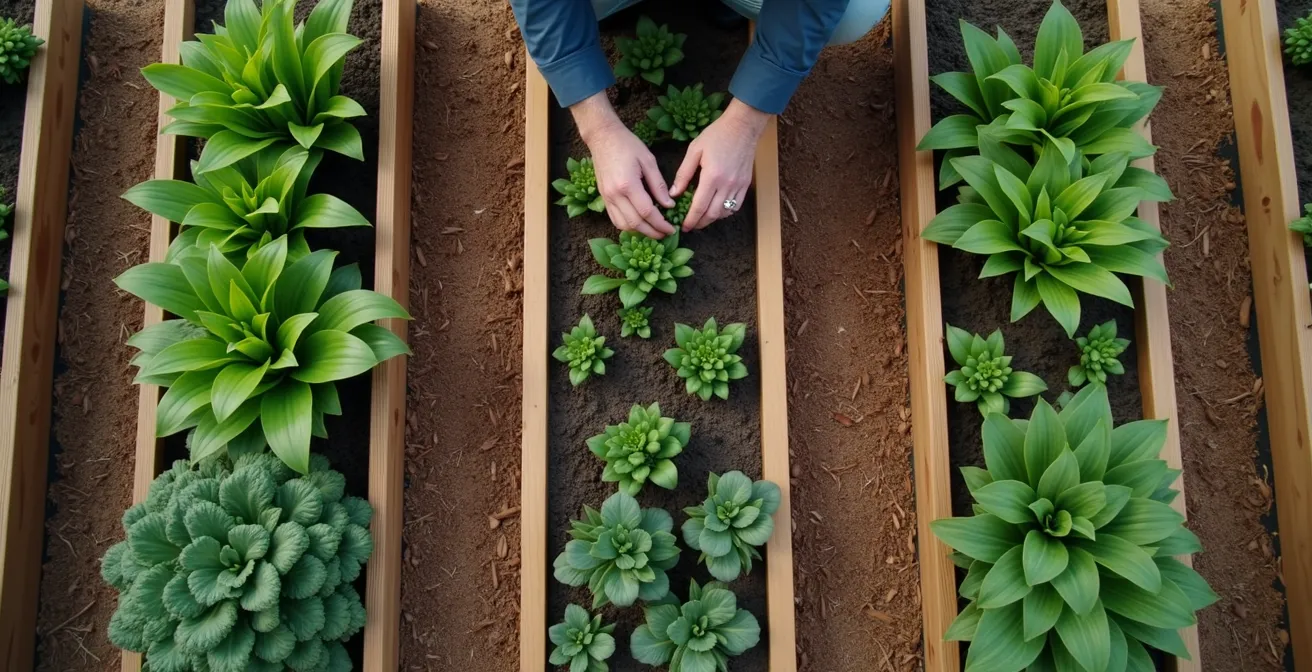
Your Action Plan: A Simple 4-Year Rotation Plan
- Year 1: Plant Solanaceae family crops (tomatoes, peppers, eggplant, potatoes) in Bed A.
- Year 2: In Bed A, plant Brassicaceae family crops (cabbage, broccoli, kale, cauliflower).
- Year 3: Use Bed A for Legumes (beans, peas) to replenish soil nitrogen.
- Year 4: Plant Cucurbit family crops (squash, cucumbers, melons) in Bed A.
- Year 5: You can now return to the Solanaceae family in Bed A, as the pest and disease cycles have been effectively broken.
By thinking in terms of years, not just seasons, you outsmart your garden’s most persistent enemies and build a truly resilient and productive space.
Key Takeaways
- Beneficial insects are more than just predators; their very scent can act as a powerful pest deterrent, creating a “landscape of fear.”
- Healthy soil is your first and best line of defense. Actively brewing and applying compost tea inoculates your garden with a protective army of micro-organisms.
- Long-term strategies like crop rotation and diverse companion planting are far more effective than reactive sprays because they break pest life cycles and build a resilient ecosystem.
How to Grow 50kg of Vegetables in a 10m² Garden?
The dream for many urban and suburban gardeners is to maximize their harvest in a limited area. Techniques like intensive planting, square-foot gardening, and vertical growing make it possible to achieve incredible yields from a small footprint. However, this high density comes with a challenge: it can create an ideal environment for pests and diseases to spread rapidly. When plants are packed closely together, there is often reduced airflow and it’s easier for pests to move from one plant to the next.
Indeed, it’s a trade-off that requires careful management. Research shows that high-density gardens can experience 30-40% more pest pressure than those with more generous spacing. This doesn’t mean you should abandon your goal of a high-yield garden. It simply means that all the principles of ecosystem resilience we’ve discussed—from building soil health with compost tea to using companion plants—become even more critical. In a small, intensive garden, you must be even more proactive.
Vertical growing is a fantastic way to increase your yield, but it requires a specific pest prevention strategy. Getting vines and vulnerable crops off the ground not only saves space but also improves air circulation and reduces contact with soil-dwelling pests like slugs. However, it also concentrates your plants, making daily monitoring essential.
Your Action Plan: Vertical Growing Pest Prevention
- Maximize Height: Install trellises that are at least 6 feet tall to lift vining crops like cucumbers and beans well off the ground, away from slugs and moisture-related diseases.
- Improve Airflow: Even when growing vertically, space plants 20% wider than standard recommendations to ensure good air circulation and reduce fungal risks in dense plantings.
- Daily Inspection: In an intensive system, pests can spread overnight. Make a quick daily check for any signs of trouble a non-negotiable part of your routine.
- Deterrent Stations: Integrate companion herbs like basil or mint in pots placed every 2-3 feet along the base of your vertical structures to create a continuous scent barrier.
- Maintain a Mulch Barrier: Apply a consistent 2-inch layer of mulch around the base of all plants to prevent soil-borne diseases from splashing onto lower leaves during watering.
Stop battling pests and start building a resilient garden ecosystem. Choose one strategy from this guide to implement this week—whether it’s brewing your first batch of compost tea or planning a simple crop rotation for next season—and begin creating a healthier, safer, and more productive space for your entire family to enjoy.