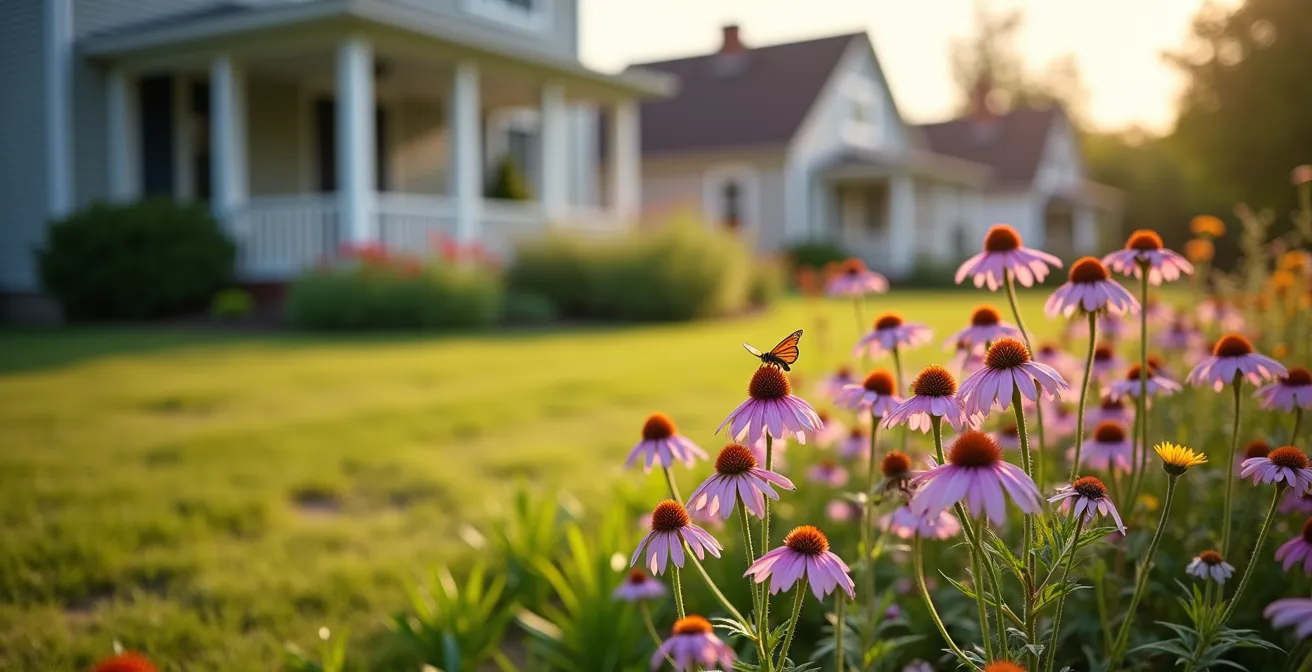
That perfect, sterile green lawn can feel more like a failure than an achievement when you know it offers nothing to local wildlife. The solution isn’t just scattering a few flower seeds; it’s about shifting your mindset from a ‘gardener’ to an ‘ecosystem curator.’ This guide will show you how to rebuild a miniature, self-sustaining ecosystem that provides food, shelter, and life-cycle support for pollinators, transforming your yard into a vibrant, living paradise that works with nature, not against it.
There’s a quiet guilt that can settle in as you look out over a pristine, monoculture lawn. It’s the color of nature, yet it’s profoundly unnatural—a green desert silent of buzzing bees and fluttering wings. You’ve followed the rules of curb appeal, but in doing so, you’ve created a space that offers little to the ecosystem it displaced. The common advice is to “plant some flowers” or “add a bird bath,” but these are often isolated gestures in a landscape that remains fundamentally hostile to wildlife. To truly make a difference, we must look deeper than just offering a quick meal.
The key isn’t to simply decorate your yard with pretty blooms, but to fundamentally rethink its purpose. What if the goal wasn’t a perfect carpet of green, but a complex, interconnected web of life? This is the rewilding mindset. It’s about creating structural diversity, fostering a living soil food web, and providing continuous, year-round life-cycle support for the creatures that call your garden home. It’s about becoming an ecosystem curator, intentionally designing a habitat that can sustain itself with resilience and beauty.
This journey transforms your role. You’ll move beyond simple planting and weeding to understanding the profound relationships between plants, insects, birds, and the very soil beneath your feet. As the great naturalist Aldo Leopold might suggest, you learn to think like a mountain—or in this case, like a meadow. As The Nature Conservancy Wisconsin highlights in their “Plant Your Own Pollinator Paradise” report:
Scientists estimate that three-fourths of the world’s flowering plants and about 35% of the world’s food crops depend on animal pollinators to reproduce.
– The Nature Conservancy Wisconsin, Plant Your Own Pollinator Paradise report
In this guide, we’ll explore the practical steps to dismantle your green desert and cultivate a thriving paradise. We will cover everything from choosing the right plants and building effective shelters to the crucial, often-overlooked practices of pest management and seasonal care that complete the ecological picture.
Summary: From Sterile Lawn to Thriving Pollinator Paradise
- Why Native Plants Survive Heat Waves Better Than Imports?
- How to Build a Solitary Bee Hotel That Actually Works?
- Bird Feeders or Berry Bushes: Which Sustains Birds Year-Round?
- The Danger of Artificial Turf for Local Soil Biodiversity
- When to Cut Back Stems to Protect Hibernating Insects?
- Why Your “Green” Fund Might Be Investing in Oil Companies?
- How to Use Nature Walks to Lower Cortisol in 20 Minutes?
- How to Stop Aphids and Slugs Without Using Toxic Sprays?
Why Native Plants Survive Heat Waves Better Than Imports?
The resilience of a pollinator paradise begins underground. While imported, ornamental plants may offer beautiful blooms, they are often ill-equipped for local climate extremes and require constant inputs of water and fertilizer. Native plants, on the other hand, have spent thousands of years co-evolving with the local soil, climate, and wildlife. Their survival secret lies in a powerful, hidden partnership: the mycorrhizal network. This is a symbiotic relationship between plant roots and fungi, creating a vast underground web that dramatically enhances a plant’s ability to access water and nutrients.
This “soil food web” is the lifeblood of a resilient garden. It’s why a native coneflower can stand tall during a drought while a non-native hydrangea wilts. The fungal network acts as an extension of the plant’s root system, reaching deep into the soil for moisture that the roots alone cannot. In fact, research demonstrates a powerful link between this symbiosis and plant hardiness; a recent study confirmed that plants with mycorrhizal fungi show 85% better drought resilience. This natural adaptation means less work for you and a more stable habitat for pollinators.
By choosing native species, you are not just planting a flower; you are plugging into an ancient, self-sustaining network. These plants provide the right kind of nectar and pollen for local bees and butterflies, their leaves feed the caterpillars of native moths, and their seeds sustain birds through the winter. This principle is so effective it’s being applied in urban engineering, where green roofs cultivated with these fungi are proven to better endure extreme weather, creating more sustainable and biodiverse cityscapes. Your backyard can be a small but powerful example of this same ecological wisdom.
How to Build a Solitary Bee Hotel That Actually Works?
While honeybees get a lot of attention, the vast majority of bee species are solitary. These gentle, efficient pollinators—like mason bees and leafcutter bees—don’t live in hives. Instead, they seek out pre-existing tunnels in wood or hollow stems to lay their eggs. A “bee hotel” is a wonderful way to provide this crucial nesting habitat, but many commercially available or poorly designed DIY versions do more harm than good by attracting parasites and disease. An effective bee hotel is about precision, not just aesthetics.
The most critical factor is the diameter of the nesting holes. Different species require different sizes, and providing a variety ensures you cater to a wider range of local pollinators. A hotel with only large-diameter holes will ignore the smaller, equally important bee species in your area. The nesting material is also key; avoid plastic straws or glass tubes which trap moisture and promote fungal growth. Natural materials like bamboo, paper straws, or drilled wood blocks are ideal.
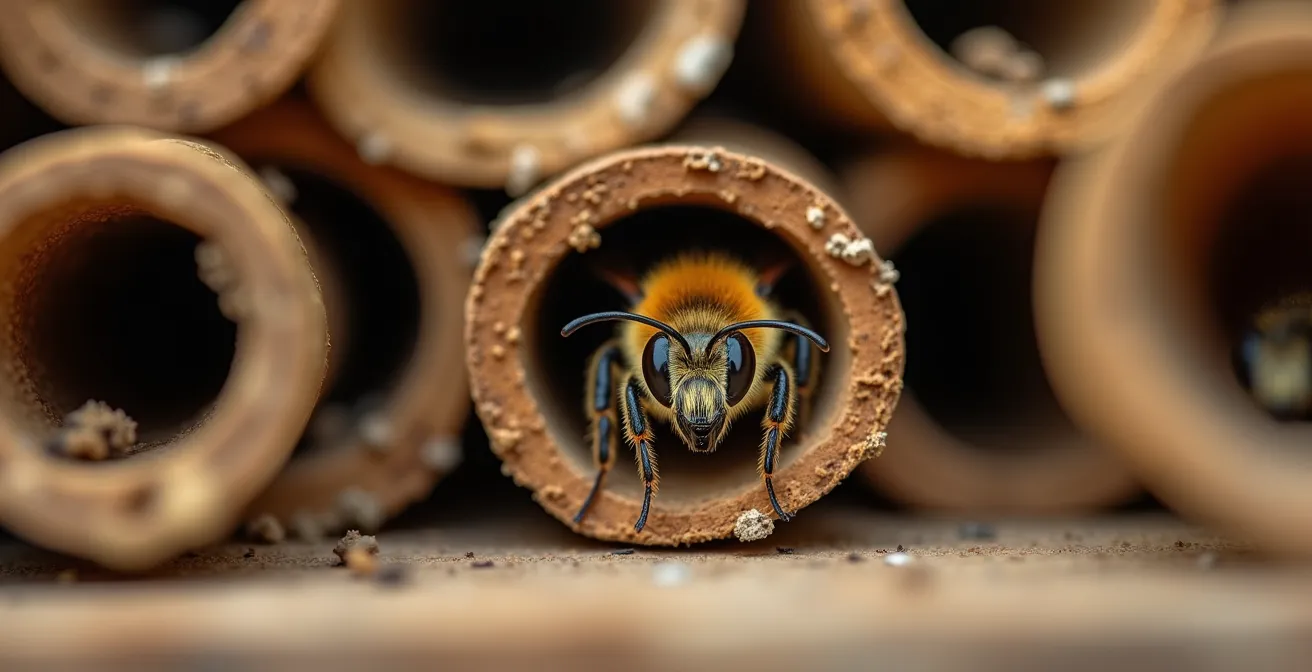
As the image above illustrates, a female mason bee will select a tube that is just the right size for her. She will then provision it with pollen and nectar, lay an egg, and seal the chamber with mud before repeating the process. To attract the most common solitary bees, your design should include tubes with a range of specific diameters.
This table outlines the optimal hole sizes for attracting different types of solitary bees, a crucial detail for a successful hotel.
| Hole Diameter | Bee Species Attracted | Nesting Material |
|---|---|---|
| 2-6mm | Small solitary species, masked bees | Various plant materials |
| 6-8mm | Mason bees (Osmia species) | Mud walls between cells |
| 8-10mm | Leafcutter bees (Megachile species) | Cut leaf sections |
Finally, a functional bee hotel is not a “set it and forget it” decoration. To prevent the buildup of parasites and disease, it requires annual maintenance. This step is what separates a true pollinator sanctuary from a potential ecological trap.
Your Bee Hotel Annual Servicing Plan: Key Steps to Follow
- Cocoon Harvest: Between late September and October, every 1-2 years, carefully remove the cocoons and place them in a ventilated “release box” (like a small cardboard box with a hole).
- Sanitation: Thoroughly clean the nesting trays or tubes with a mild, non-toxic disinfectant to kill any lingering parasites or mold.
- Winter Storage: Store the release box in a cool, dry, and unheated location like a shed or garage to protect the developing bees from winter elements and predators.
- Spring Release: Once temperatures in spring are consistently above 10°C (50°F), place the release box outside, ideally near the cleaned hotel, to allow the new generation of bees to emerge.
- Re-installation: Put your clean, empty bee hotel back in its sunny, south-facing spot, ready for the new residents to move in and begin the cycle again, as detailed by sources like the RSPB.
Bird Feeders or Berry Bushes: Which Sustains Birds Year-Round?
The cheerful sight of birds at a feeder is one of the great joys of a garden. However, while feeders provide a valuable supplemental food source, especially in harsh winters, they are an artificial solution that can create dependency and attract non-native species. For true, year-round sustenance that supports the entire ecosystem, nothing beats a diverse selection of native, berry-producing shrubs and trees. This is a core tenet of the rewilding mindset: creating natural systems, not just offering handouts.
A bird feeder provides one type of food, usually seed or suet. In contrast, a native berry bush like a Serviceberry (Amelanchier), Dogwood (Cornus), or Viburnum offers a complete support package. In the spring, their flowers provide crucial nectar for early-emerging pollinators. In the summer, these same plants host a variety of caterpillars—the number one food source for baby birds. A clutch of chickadees, for example, requires thousands of caterpillars to fledge. No seed feeder can provide that essential protein.
Then, in the fall and winter, the berries produced by these shrubs offer high-energy food packed with fats and antioxidants, perfectly timed for when birds need it most for migration or surviving the cold. A single native oak tree can support over 500 species of caterpillars, making it a veritable bird buffet. A feeder, by comparison, is a lonely diner. By planting a succession of native shrubs and trees that flower and fruit at different times, you create a reliable, year-round food supply that is perfectly synchronized with the life cycles of your local bird and insect populations.
The Danger of Artificial Turf for Local Soil Biodiversity
In the quest for a low-maintenance lawn, some homeowners turn to artificial turf. This plastic carpet is often marketed as an eco-friendly solution that saves water. However, it represents the ultimate expression of the “green desert”—a completely sterile surface that is devastating to local biodiversity. It is not a solution; it is the final nail in the coffin for a living yard. A traditional grass lawn is already a poor habitat, but at least it contains living soil. Artificial turf obliterates it entirely.
Beneath the plastic grass, the soil is compacted and often covered with a weed barrier, suffocating the complex ecosystem of microbes, fungi, earthworms, and insects that form the foundation of a healthy environment. This soil food web dies off, unable to perform its vital functions of aerating the soil, cycling nutrients, and absorbing water. Rainwater, instead of soaking into the ground to replenish aquifers, runs off the non-porous surface, carrying pollutants and contributing to flooding. The surface itself can also become dangerously hot in the sun, creating a “heat island” effect that is inhospitable to any creature that might land on it.
The irony is that replacing a traditional lawn—which already has a staggering environmental cost—with plastic is a step in the wrong direction. According to the EPA, lawn irrigation consumes an estimated 20 trillion gallons of water per year in the United States alone. The answer isn’t to cover it with petroleum-based products, but to replace it with a living, breathing, and largely self-sufficient ecosystem of native plants. A meadow of native grasses and wildflowers requires a fraction of the water, supports hundreds of species, and actively builds healthy soil over time, all while eliminating the need for fertilizers and mowing.
When to Cut Back Stems to Protect Hibernating Insects?
The impulse to “tidy up” the garden in the fall is strong. We’re taught to cut back all the dead stems and rake away the leaves for a clean winter slate. However, from a rewilding perspective, this is one of the most destructive things you can do. Those hollow stems of coneflowers, bee balm, and Joe Pye weed are not debris; they are the overwintering nurseries for the next generation of pollinators. Many solitary bees and other beneficial insects lay their eggs inside these stems, where their larvae will safely develop through the winter to emerge in spring.
When you cut everything down to the ground in October, you are throwing away a huge portion of next year’s bees. The same goes for the leaf litter. A blanket of leaves is not messy; it is essential habitat for queen bumblebees, fireflies, and countless other invertebrates to shelter from the cold. The “Leave the Leaves” movement is about more than just free mulch; it’s about providing life-cycle support.
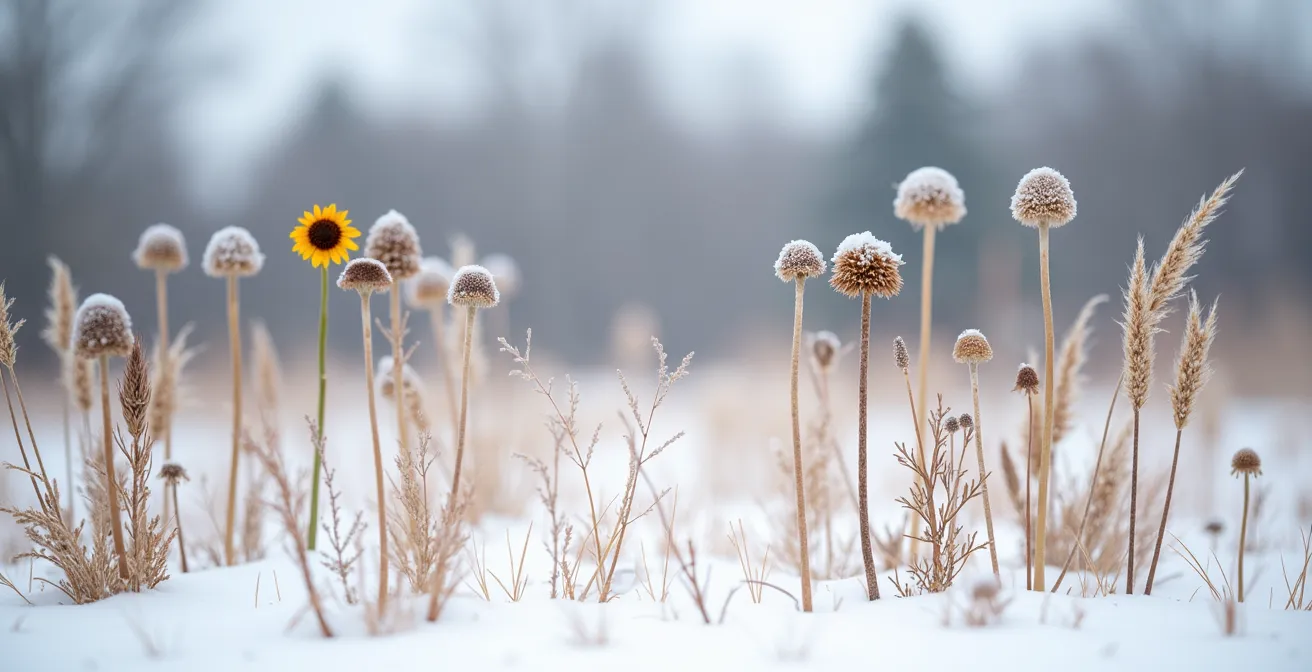
The proper time for spring cleanup is not determined by the calendar, but by the temperature and the insects themselves. Rushing to clean up at the first sign of a warm day can expose hibernating insects to a late frost. The patient ecosystem curator waits for nature’s cues. A good rule of thumb is to wait until daytime temperatures are consistently above 10°C (50°F) for about a week. You should see the first native bees out and actively foraging. This is your signal that most of the stem-nesters have emerged.
Even then, the cleanup should be gentle. Here is a better approach:
- Wait for Warmth: Monitor temperatures for several consecutive days above 10°C (50°F) before taking any action.
- Look for Activity: Watch for the first native bees to emerge and begin foraging. This is the green light.
- Cut High: Instead of cutting stems to the ground, cut them to varying heights between 12 and 18 inches. These old stems will provide nesting sites for this year’s bees.
- Chop and Drop: Leave the material you cut at the base of the plants. This “chop and drop” technique returns organic matter to the soil and provides cover for ground-dwelling species.
- Leave the Leaves: Rake leaf litter gently into your garden beds instead of bagging it up. It will break down into valuable humus and protect the soil.
Why Your “Green” Fund Might Be Investing in Oil Companies?
In the world of finance, the term “green” or “ESG” (Environmental, Social, and Governance) can sometimes be a form of “greenwashing,” where a fund’s holdings don’t quite match its eco-friendly marketing. A similar trap exists in the gardening world. You might meticulously choose plants labeled “bee-friendly” at a garden center, believing you’re supporting pollinators, only to bring home a plant treated with systemic pesticides that can harm or kill the very insects you want to attract.
This is the horticultural equivalent of a “green” fund investing in oil companies. The problem often lies with neonicotinoids, a class of systemic insecticides. When a plant is treated with “neonics,” the chemical is absorbed into all of its tissues—the roots, leaves, stems, nectar, and pollen. It’s designed to kill any insect that chews on the plant. The poison becomes part of the plant itself. When a bee forages on the pollen or nectar of a treated plant, it ingests a neurotoxin that can cause disorientation, a weakened immune system, or death.
Many large-scale growers treat their ornamental plants with these chemicals to ensure they look “perfect” on store shelves, free of any insect damage. The “bee-friendly” label might only refer to the fact that the flower species is one that bees are known to visit, not that the specific plant for sale is safe for them. This creates a dangerous disconnect for the well-intentioned gardener. You are, in effect, setting out a poisoned feast. The only way to be certain is to grow your own plants from untreated seeds or to buy from trusted, local, organic nurseries that can guarantee their plants are neonicotinoid-free. Ask questions and demand transparency—your pollinators depend on it.
How to Use Nature Walks to Lower Cortisol in 20 Minutes?
Creating a pollinator paradise is not just a gift to wildlife; it is a profound gift to yourself. The daily act of observing the life that unfolds in your garden is a powerful antidote to the stress of modern life. This is the concept of “soft fascination,” where the gentle, effortless attention required to watch a bee move from flower to flower allows our minds to rest and recover. It’s a natural form of mindfulness that has been shown to lower cortisol, the body’s primary stress hormone.
You don’t need a sprawling meadow to experience this. A small patch of native flowers, a single berry bush, or even a few pots on a balcony can become a sanctuary for both pollinators and your mental health. The key is to move from active “doing” (weeding, planting, building) to passive “being” (observing, listening, noticing). This shift in engagement is where the restorative magic happens. Your garden becomes a place for quiet contemplation, a living diorama of resilience and interconnectedness.
Simply sit and watch. Which flowers are the bumblebees visiting? Can you spot the tiny, metallic green sweat bees? Do you see a leafcutter bee meticulously carving a perfect circle from a rose leaf to carry back to its nest? This practice connects you to the rhythms of nature and the success of the ecosystem you are curating. It provides a deep sense of purpose and satisfaction that mowing a sterile lawn can never offer. Here is a simple 20-minute routine to guide your experience:
- Minutes 1-5: Focus on Sound. Close your eyes or soften your gaze and just listen. Tune into the different buzzing frequencies, the flutter of wings, and the rustle of leaves as birds forage in the undergrowth.
- Minutes 6-10: Track Flight Paths. Pick one pollinator and follow its journey. Watch its path between flowers. Notice its speed, its hovering patterns, and its choices.
- Minutes 11-15: Observe Color and Pattern. Zoom in on a single flower. Notice the intricate patterns on its petals, which often act as nectar guides. Observe the vibrant colors on the insects themselves.
- Minutes 16-20: Experience Scent. Move closer to different plants. Breathe deeply and experience the various scents of the garden, from the sweet perfume of phlox to the earthy smell of damp soil.
Key Takeaways
- Shift your mindset from a gardener to an “ecosystem curator” to build a truly self-sustaining habitat.
- Prioritize native plants to leverage their natural resilience and deep-rooted connections with local wildlife and soil fungi.
- Provide “life-cycle support” by leaving stems and leaves for overwintering insects, not just offering flowers for adults.
How to Stop Aphids and Slugs Without Using Toxic Sprays?
As your pollinator paradise begins to teem with life, you will inevitably attract insects that you might consider “pests,” like aphids and slugs. The immediate reflex, conditioned by years of traditional gardening advice, might be to reach for a spray. But in a living ecosystem, pesticides—even so-called “organic” ones—are a blunt instrument. They are indiscriminate, often killing the beneficial insects right alongside the pests. A rewilding approach asks a different question: “What in this ecosystem eats aphids and slugs?”
The answer is: a lot of things! Your goal is not to eradicate pests, but to achieve a natural balance by inviting in their predators. Aphids are a favorite food of ladybug larvae, lacewings, and hoverflies. Slugs are hunted by ground beetles, toads, and some bird species. By creating a habitat that welcomes these beneficial predators, you establish a self-regulating system of pest control. This means providing ground cover for beetles, a water source for toads, and planting flowers that attract adult lacewings and hoverflies, who will then lay their eggs near aphid colonies.
You can think of aphids as a crucial food source that will draw in the very allies you need. A small, controlled aphid population is not a failure; it is a sign that you are successfully building the lower levels of the food web. However, if a population gets out of hand before the predators arrive, there are targeted, non-toxic methods you can use that will not disrupt the entire system.
The following table, inspired by resources like Earth’s Ally, outlines safe and effective methods for managing common garden pests without harming your pollinators.
| Pest Control Method | Target Pests | Pollinator Safety |
|---|---|---|
| Lacewing/Hoverfly larvae | Aphids | 100% safe |
| Ground beetle habitat | Slugs, caterpillars | 100% safe |
| Diatomaceous earth (base of stems only) | Soft-bodied pests | Safe when applied away from flowers |
| Neem oil (dormant season) | Scale, aphids | Safe when applied before bloom |
By cultivating a complex web of life, you are creating an environment where pests rarely become a crisis. You are fostering a resilient community where nature, for the most part, takes care of itself. This is the ultimate goal of the ecosystem curator.
Start today. You don’t need to rip up your entire lawn at once. Begin with a small corner, a border, or a “hellstrip” by the sidewalk. Remove the turf, amend the soil with compost, and plant a few native species. Watch it, learn from it, and witness the life that arrives. This small act of rewilding is a powerful step away from the green desert and toward a vibrant, hopeful, and truly living paradise.
Frequently Asked Questions about Converting a Lawn
How much does it cost to convert a lawn to pollinator habitat?
The cost can be quite modest for a small area. For a 100-square-foot patch, preparing the soil and seeding it with native pollinator plants can cost as little as $30. For larger projects, converting a full acre can range from $800 to $1,799, depending on the plant selection and preparation methods.
How long does establishment take?
Patience is key. A pollinator meadow is a long-term investment in biodiversity. While some fast-growing plants like clover might establish in the first year, many native perennial flowers will focus on root growth in year one and begin to truly flourish and flower in the second year and beyond.
What about HOA restrictions?
Navigating Homeowner Association rules can be a challenge. A good strategy is to start small with a defined garden bed rather than letting a large area go wild. Maintain clean, neat edges to show the space is intentional and cared for. Creating a small sign explaining your garden is a “Certified Pollinator Habitat” and communicating the benefits to your neighbors can also help build support and prevent complaints.