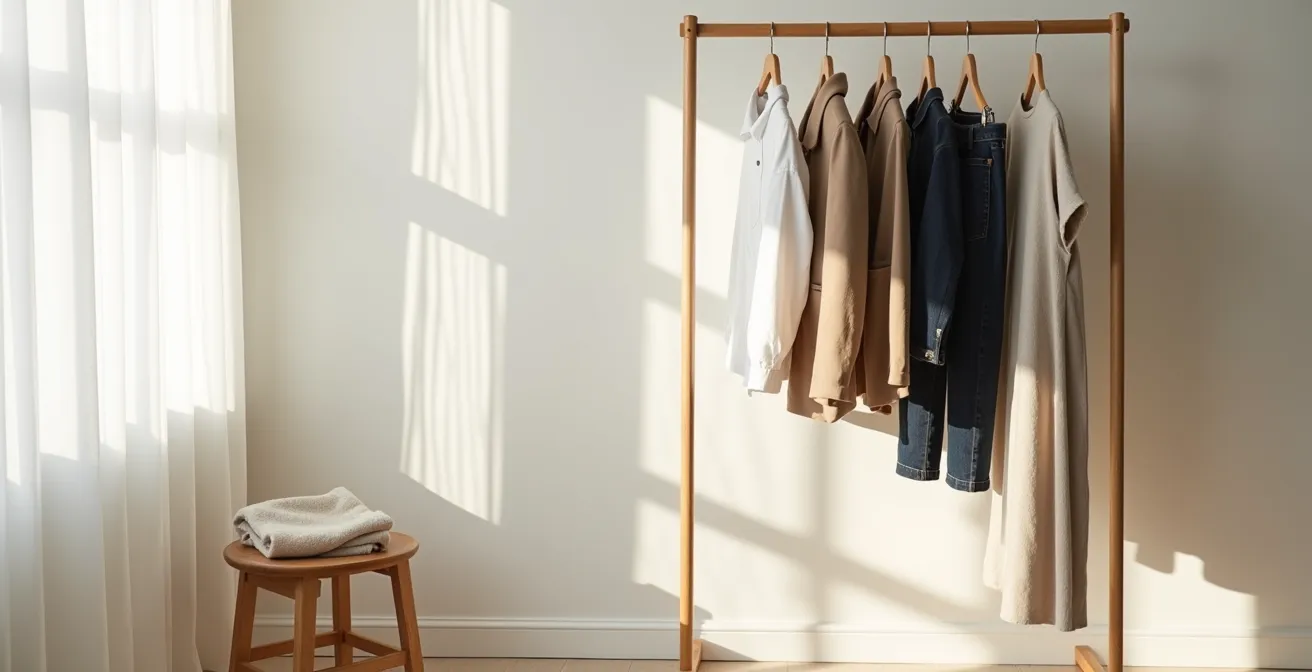
The feeling of a closet full of clothes but ‘nothing to wear’ isn’t a fashion problem—it’s a symptom of decision fatigue.
- Poor quality, unflattering colors, and trend-driven items create cognitive friction, wasting your mental energy daily.
- Building a capsule wardrobe is a system for curating high-quality, personalized pieces that work together seamlessly.
Recommendation: Shift your focus from accumulating clothes to building a functional wardrobe architecture that gives you back time and confidence.
For the modern professional, the day begins with a series of decisions long before you’ve had your first coffee. What starts as a simple choice—what to wear—can quickly devolve into a frustrating cycle of trying on and discarding outfits. You stand before a closet overflowing with clothes, yet the familiar thought echoes: “I have nothing to wear.” This daily friction isn’t just a minor inconvenience; it’s a significant drain on your most valuable resource: your mental energy. This is a classic case of decision fatigue, where the sheer volume of low-quality choices exhausts your cognitive capacity before the workday has even begun.
Many will suggest the standard solutions: declutter your space, organize by color, or buy more “versatile” pieces. While these are parts of the puzzle, they don’t address the root cause. They are treating the symptom—a disorganized closet—rather than the disease: a lack of a coherent system. The problem isn’t just the quantity of your clothes; it’s the quality, the lack of personal alignment, and the psychological traps that lead to impulsive, unsatisfying purchases.
But what if the true solution wasn’t about having more options, but about having the *right* options? This is the promise of a capsule wardrobe. It’s not about stark minimalism or rigid rules. Instead, think of it as designing a personal uniform for success—a curated collection of high-quality, perfectly fitting, and interchangeable items that empower you. It’s a strategic shift from a collection of clothes to a functional wardrobe architecture, designed to eliminate cognitive friction and give you back those 100+ hours of decisions a year. This guide will walk you through the principles of building such a system, from understanding quality and personal color to mastering your shopping psychology.
To help you navigate this sartorial transformation, this article is structured to address the core challenges and provide actionable solutions. Below, the table of contents outlines the key pillars for building a wardrobe that works for you, not against you.
Summary: A Strategic Guide to Curing Decision Fatigue with Your Wardrobe
- Why Your $10 T-Shirt Loses Its Shape After Two Washes?
- How to Find Your Color Season to Stop Buying Unflattering Clothes?
- Cotton or Polyester: Which Is Better for Skin Breathability?
- The Cost of Buying “It” Items That Go Out of Style in 3 Months
- When to Buy Winter Coats for the Best Discount?
- Why You Shop More When You Are Stressed or Tired?
- Why Emotional Intelligence Is Rated Higher Than IQ for Managers?
- How to Identify Genuine Fair Trade Products vs Marketing Fluff?
Why Your $10 T-Shirt Loses Its Shape After Two Washes?
The allure of a $10 t-shirt is undeniable, but its true cost is revealed not on the price tag, but in its short, disappointing lifespan. The primary reason fast-fashion garments fail so quickly lies in their construction: low-quality fabric, poor stitch density, and shortcuts in manufacturing. These items are designed for rapid, trend-driven consumption, not longevity. The fabric is often made from short-staple fibers that are loosely woven, causing it to stretch, pill, and lose its shape the moment it faces a washing machine. This creates a frustrating cycle of buy-wear-discard that clutters your closet with “zombie” garments—items that are technically still there but are unwearable in any professional or polished context.
This cycle of disposable fashion is a major contributor to decision fatigue. Each misshapen shirt or pilled sweater is another “no” you have to process each morning, adding to the cognitive load of getting dressed. The financial cost is also a fallacy; a $50 t-shirt that lasts five years has a far lower cost-per-wear than five $10 t-shirts that must be replaced annually. This disposable mindset is a widespread issue; staggering research reveals Americans wear their clothes only 7 times on average before discarding them. Shifting your perspective to see clothing as an investment rather than a consumable is the first step toward building a functional wardrobe.
Learning to identify quality is a skill that empowers you to break this cycle. It allows you to invest in pieces that will hold their shape, feel better against your skin, and serve you for years, not weeks. Instead of a closet full of fleeting disappointments, you begin to build a reliable foundation of pieces you can count on, simplifying your morning routine immensely. The following checklist will help you become a more discerning shopper, able to spot quality from a distance.
Your In-Store Quality Assessment Plan: 5 Points to Check
- Fabric Weight: Hold the garment up to a light source. A quality, dense fabric won’t be transparent and will have a substantial feel.
- Stretch Test: Gently pull a small section of the fabric and release it. It should immediately snap back to its original shape without sagging.
- Stitch Density: Examine the seams. A higher number of stitches per inch indicates a stronger, more durable construction that is less likely to pucker or split.
- Fabric Texture: Feel the material. High-quality natural fibers like cotton or wool should feel smooth and consistent, not scratchy or uneven.
- Seam Finishing: Look inside the garment. Cleanly finished seams, like French seams or serged edges, prevent fraying and are a hallmark of a well-made piece.
How to Find Your Color Season to Stop Buying Unflattering Clothes?
Have you ever bought a beautiful sweater in a trendy color, only to find it makes you look tired or washed-out? This common frustration is rarely about the garment itself, but about how its color interacts with your unique skin tone, hair, and eye color. The solution is color analysis, a system that categorizes individual coloring into “seasons” (typically Spring, Summer, Autumn, and Winter) to identify a palette of hues that naturally harmonize with you. Understanding your season is transformative; it eliminates the guesswork of shopping and ensures that every piece you own makes you look radiant and healthy.
When you wear colors from your seasonal palette, the effect is immediate. Your skin appears clearer, your eyes brighter, and your overall look more cohesive and put-together. Conversely, wearing colors that clash with your natural undertones can highlight imperfections and create a sense of disharmony. By curating a wardrobe within your color season, you guarantee that every top can be mixed and matched with every bottom, exponentially increasing your outfit combinations and drastically simplifying your morning decisions. It’s a foundational element of a successful wardrobe architecture.

As you can see, the process involves comparing how different color families interact with your complexion in natural light. A color that complements you will make your face light up, while an unflattering one will cast shadows or create a sallow look. While professional analysis is an option, you can start by identifying whether your skin has warm (yellow, peachy) or cool (pink, blue) undertones. The table below offers a simplified overview of some seasons within the more detailed 12-season system, illustrating how dominant characteristics determine your ideal palette.
This comparative analysis, detailed in systems like the one explained by The Concept Wardrobe, provides a clear roadmap for your shopping.
| Season Type | Key Characteristics | Best Colors | Colors to Avoid |
|---|---|---|---|
| Light Spring | Light, warm, bright | Coral, peach, light aqua | Black, burgundy |
| True Spring | Warm, bright, vibrant | Orange-red, grass green | Muted tones, grey |
| Light Summer | Light, cool, muted | Powder blue, soft pink | Black, orange |
| True Summer | Cool, soft, muted | Rose, lavender, sage | Orange, gold |
| Soft Autumn | Muted, warm, gentle | Olive, camel, rust | Bright pink, electric blue |
| Deep Winter | Dark, cool, bright | True red, royal blue | Beige, orange |
Cotton or Polyester: Which Is Better for Skin Breathability?
The choice between cotton and polyester goes far beyond simple preference; it’s a decision that directly impacts your daily comfort and the performance of your clothing. The key difference lies in how each fiber interacts with moisture, which is the essence of breathability. Cotton, a natural fiber, is hydrophilic, meaning it loves water. It can absorb a significant amount of moisture, pulling it away from your skin, which feels great on a dry day. However, once saturated, cotton becomes heavy and takes a very long time to dry, leaving you feeling damp and clammy. This makes it ideal for everyday wear in low-activity settings but less suitable for a workout or a hot, humid commute.
Polyester, on the other hand, is a synthetic fiber that is hydrophobic—it repels water. It absorbs very little moisture. Instead of soaking up sweat, it allows moisture to move through the fabric and evaporate from the surface. This “wicking” property is why polyester dominates the activewear market; it keeps you dry and comfortable during intense physical activity. However, this same property can make it feel less “natural” or breathable against the skin for casual, all-day wear compared to the softness of high-quality cotton.
So, which is better? The answer depends entirely on the context. For the professional, a well-structured capsule wardrobe will strategically include both.
- For your core wardrobe: Prioritize natural fibers like high-quality cotton, linen, wool, and silk for your blouses, trousers, and daily-wear items. They offer superior comfort and a more luxurious feel for the 9-to-5.
- For performance and travel: Incorporate polyester and other synthetics for your workout gear, travel-specific pieces, and outerwear. A touch of elastane (like Lycra or Spandex) in cotton garments can also provide stretch and shape retention without sacrificing too much breathability.
Understanding this material science allows you to build a truly functional wardrobe, where each piece is selected not just for its look, but for its performance in a specific context. This eliminates the discomfort that adds another layer of distraction to your day.
The Cost of Buying “It” Items That Go Out of Style in 3 Months
The fashion industry thrives on the ephemeral, promoting a constant cycle of “it” items and micro-trends designed to feel essential one moment and obsolete the next. Engaging in this cycle is one of the most significant saboteurs of a functional wardrobe and a prime source of financial drain and mental clutter. The true cost of these items isn’t just their price tag; it’s the opportunity cost of not investing in timeless, high-quality pieces. That trendy puff-sleeve blouse or neon handbag creates a fleeting thrill but quickly becomes another piece of closet deadwood, contributing to the “nothing to wear” paradox.
This constant chase is driven by powerful psychological triggers. As James Clear explains in his work on habits, this behavior is often a manifestation of the Diderot Effect.
The Diderot Effect creates a spiral where one new purchase makes you dissatisfied with your existing possessions, leading to unnecessary spending.
– James Clear, Atomic Habits
Buying one trendy item makes your classic pieces feel dated, prompting you to buy more to match the new aesthetic, creating a never-ending cycle of consumption. This behavior is not only mentally exhausting but financially significant, chipping away at the funds that could be used for foundational investments.
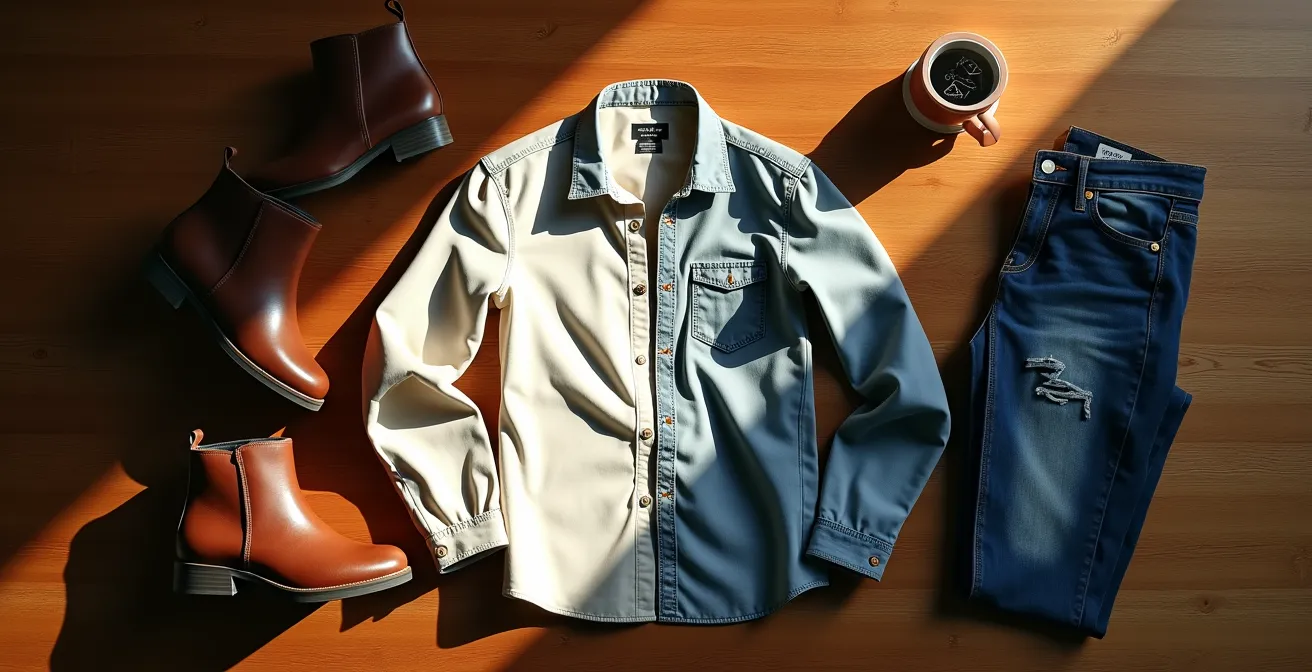
The visual contrast between timeless staples and fleeting trends is stark. Classic pieces—a well-tailored blazer, a crisp white shirt, perfectly fitting denim—are defined by their clean lines, quality materials, and versatile silhouettes. They form the unshakable foundation of a capsule wardrobe because their relevance is not tied to a particular season. By consciously opting out of the micro-trend cycle and focusing 80-90% of your wardrobe budget on these timeless archetypes, you build a system that is immune to the whims of fashion. This doesn’t mean your style has to be boring; personality can be injected through accessories, which are a lower-investment way to play with trends.
When to Buy Winter Coats for the Best Discount?
Building a high-quality capsule wardrobe requires investment pieces, and few items are as significant an investment as a well-made winter coat. The key to acquiring these foundational garments without breaking the bank is strategic, off-season shopping. Retail operates on a predictable calendar, and understanding its rhythm allows you to purchase superior items at a fraction of their peak-season price. The absolute best time to buy a winter coat is not when you need it in October or November, but when retailers are desperate to clear floor space for spring collections.
This typically occurs in late January and February. During this period, you can expect discounts of 50-70% on premium wool, down, and cashmere coats that were full-price just weeks earlier. This requires foresight and planning, but the payoff is immense. You acquire a garment of exceptional quality and durability for the price of a mid-range, fast-fashion alternative. This principle applies across categories: swimwear is cheapest in September, and sandals are on clearance in August. A strategic shopping calendar is an essential tool for the intelligent capsule wardrobe builder.
This approach is perfectly illustrated when comparing the long-term value of a strategically purchased luxury item versus a full-price, mid-range one. The concept of cost-per-wear becomes crystal clear.
Case Study: The Second-Hand Luxury Coat Investment
A consumer tracking study highlighted a powerful example of value. A shopper purchased a designer wool coat, originally priced at $1,200, from a luxury consignment store for $300 during the off-season. With proper care, the coat remained a stylish and functional staple for over eight years, resulting in a remarkable cost-per-wear of under $5 for each use during a cold season. In contrast, a new, mid-range coat purchased for $400 would typically show significant wear after just three seasons, requiring replacement and ultimately costing far more over the same eight-year period. This demonstrates that true value lies in quality and longevity, not the initial price tag.
Adopting a proactive, calendar-based shopping strategy instead of a reactive, needs-based one is a cornerstone of smart wardrobe curation. It transforms you from a consumer into a savvy investor in your own style.
Why You Shop More When You Are Stressed or Tired?
The impulse to “add to cart” after a long, stressful day is a near-universal experience. This isn’t a lack of willpower; it’s a predictable psychological response. When you are stressed, tired, or feeling other strong emotions, your brain’s prefrontal cortex—the center for rational decision-making—is compromised. In this state, the more primitive, emotion-driven parts of your brain take over. Shopping provides a quick, accessible hit of dopamine, a neurotransmitter associated with pleasure and reward. This creates a temporary feeling of relief or happiness, which is why the behavior, often called “retail therapy,” is so common. In fact, studies show that a staggering 69% of Americans admit to engaging in emotional shopping.
The problem is that this relief is fleeting. The dopamine high fades quickly, often replaced by feelings of guilt, regret, and the logistical burden of owning yet another item you don’t truly need. These impulse purchases are almost never aligned with your capsule wardrobe goals. They are typically trend-driven, ill-fitting, or outside your color palette—in short, they are future closet clutter. They directly feed the cycle of decision fatigue by adding more non-functional options to the morning equation.
Recognizing the triggers for this behavior is the first step to controlling it. A simple but highly effective technique is the HALT method, an acronym for Hungry, Angry, Lonely, and Tired. These four states are powerful drivers of impulsive behavior. Before making any non-essential purchase, take a moment to check in with yourself.
- Hungry: A drop in blood sugar impairs judgment. Have a healthy snack before you consider browsing online stores.
- Angry: Heightened emotion clouds rational thought. Channel that energy into a workout, journaling, or talking it out.
- Lonely: The desire for connection can be misdirected into consumption. Call a friend or family member instead.
- Tired: Exhaustion is a major cause of poor decision-making. Prioritize rest and revisit the purchase decision when you’re clear-headed.
By implementing a mandatory 24-hour waiting period on all purchases when you identify with any HALT state, you create a crucial buffer that allows your rational brain to come back online. This simple practice can save you hundreds of dollars and prevent countless regrettable items from entering your home.
Why Emotional Intelligence Is Rated Higher Than IQ for Managers?
In the corporate world, emotional intelligence (EQ)—the ability to understand and manage your own emotions and those of others—is now widely recognized as a more critical predictor of success than raw intellect (IQ). Great managers excel at self-awareness, self-regulation, and empathy. What is fascinating is that these exact same skills are the secret to mastering your wardrobe and curing decision fatigue. Building a capsule wardrobe is not an intellectual exercise; it’s an act of “Wardrobe EQ.” It requires you to look inward, understand your true needs, and regulate the impulsive behaviors that lead to a chaotic closet.
The core components of EQ translate directly to wardrobe management. Self-awareness is about understanding why you buy what you buy. Is it out of need, or is it driven by stress, insecurity, or the desire to project a certain image? It’s also about honestly assessing what you *actually* wear, not what you fantasize about wearing. Self-regulation is the ability to pause before an impulse purchase, applying methods like the HALT checklist, and choosing the long-term satisfaction of a functional wardrobe over the short-term thrill of a new acquisition.
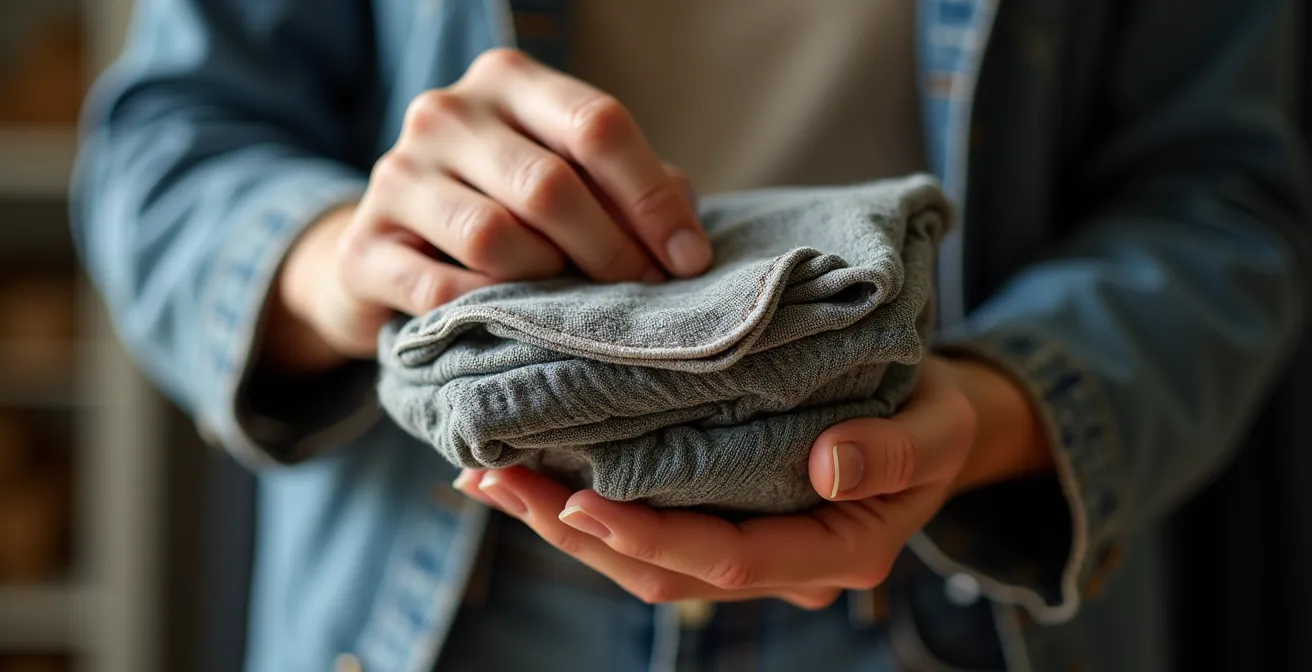
This mindful audit is EQ in practice. It’s an empathetic conversation with yourself about what truly serves your lifestyle. This concept is brilliantly demonstrated by one of the most famous minimalist fashion challenges.
Wardrobe EQ in Practice: Project 333
Courtney Carver’s “Project 333” is a powerful exercise in wardrobe emotional intelligence. Participants are challenged to dress with just 33 items for 3 months. The most profound outcome is not the minimalist wardrobe itself, but the self-discovery it sparks. People consistently find that they wore only a small fraction of their clothes anyway—often aligning with the 80/20 principle, where they wore 20% of their clothes 80% of the time. By acknowledging this reality (self-awareness) and consciously curating a limited, functional collection (self-management), participants report a dramatic reduction in decision fatigue, a surge in creativity, and a newfound confidence in their style.
Key takeaways
- A capsule wardrobe’s main benefit is reducing ‘decision fatigue’ by eliminating unwearable options and streamlining choices.
- Investing in high-quality, timeless pieces with a low ‘cost-per-wear’ is more economical than buying cheap, disposable fast fashion.
- Understanding your personal color palette and the properties of fabrics like cotton vs. polyester are crucial for building a truly functional wardrobe.
How to Identify Genuine Fair Trade Products vs Marketing Fluff?
As you curate a more intentional wardrobe, your focus naturally expands from personal style to the broader impact of your choices. A truly sophisticated wardrobe is not just chic and organized, but also conscious. However, the rise of conscious consumerism has been met with a surge in “greenwashing”—marketing tactics designed to make a company appear more ethical and sustainable than it truly is. Vague terms like ‘eco-friendly,’ ‘conscious,’ or ‘sustainable’ are often used without any substantiation, making it difficult for consumers to separate genuine efforts from marketing fluff.
The key to navigating this landscape is to look for third-party certifications. These are labels from independent organizations that have audited a brand’s supply chain against rigorous standards. While no single certification covers everything, understanding the main players allows you to make informed decisions. A brand that is truly committed to ethical practices will be transparent and proud to display these verifiable credentials, rather than hiding behind self-created logos and ambiguous language. For instance, a green leaf logo designed by the brand itself is a red flag; a GOTS or Fair Trade Certified logo is a green light.
The following table, based on analysis from platforms like Good On You, breaks down the scope and focus of the most reputable certifications in the fashion industry. This hierarchy helps you understand what each label actually guarantees.
| Certification | Scope | Strengths | Limitations |
|---|---|---|---|
| B-Corp | Entire business model | Holistic assessment of social and environmental impact | Self-reported data, not fashion-specific |
| GOTS | Organic textiles | Covers 70%+ organic content, labor standards | Doesn’t cover farming stage |
| Fair Trade Certified | Supply chain workers | Ensures fair wages and safe conditions | May cover only one part of supply chain |
| OEKO-TEX | Chemical safety | Tests for harmful substances | Doesn’t address labor or sustainability |
| Cradle to Cradle | Circular design | Focus on recyclability and safe materials | Complex and expensive certification |
Building a capsule wardrobe is the ultimate expression of sustainable fashion. By buying fewer, better things and wearing them for years, you are already drastically reducing your environmental footprint. Taking the extra step to ensure those few, high-quality purchases are also ethically made elevates your wardrobe from a tool for personal efficiency to a statement of your values. It closes the loop on a truly intentional lifestyle.
Ready to build a wardrobe that truly reflects your values and simplifies your life? The journey begins not in a store, but in your own closet. The first, most powerful step is to conduct a mindful audit, applying the principles of quality and self-awareness we’ve discussed to what you already own.